Echinocactus grusonii — Monstrose Care Guide
Learn how to grow the monstrose golden barrel cactus with bright light, fast drainage, careful watering, and a cool, dry winter rest.
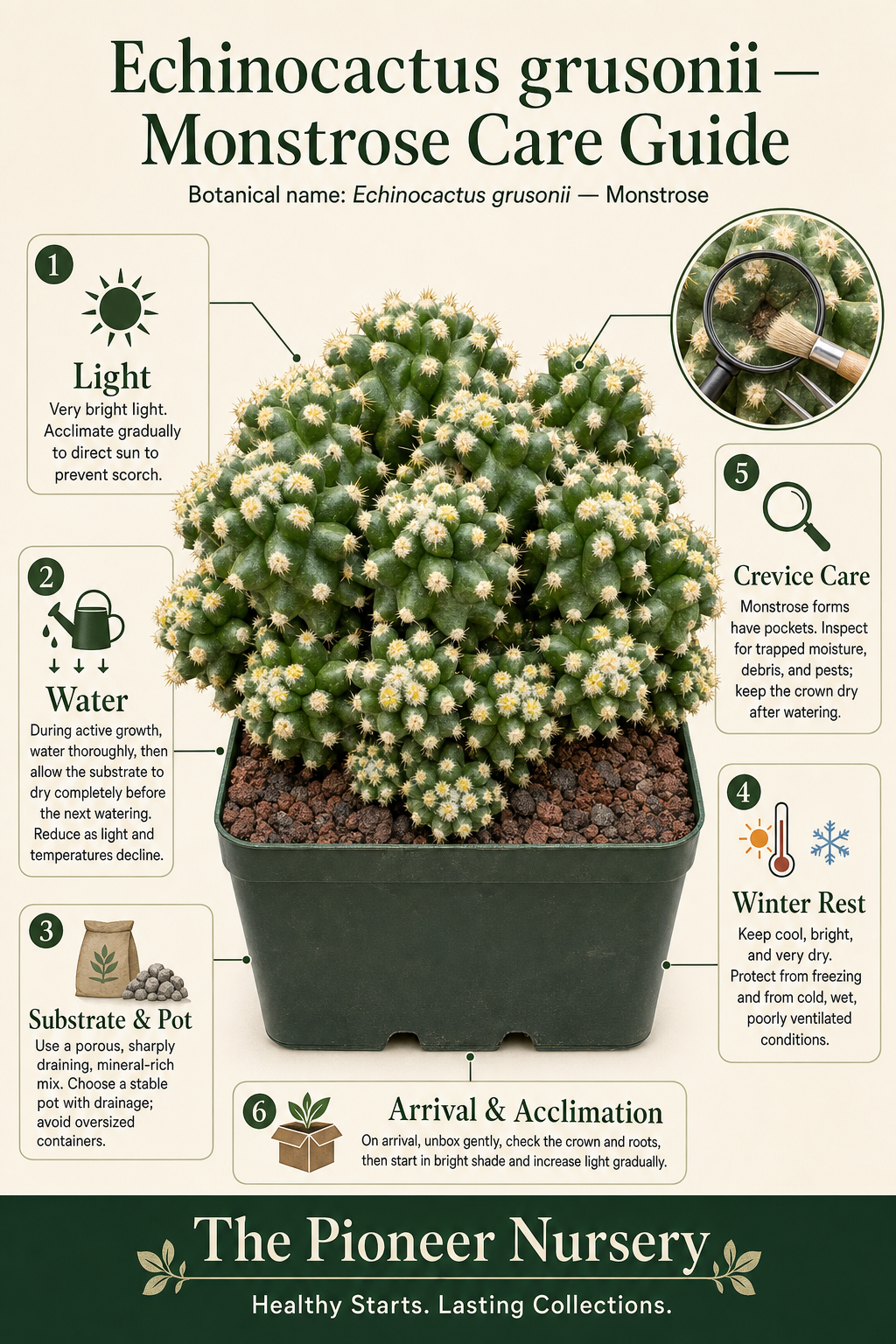
Echinocactus grusonii — Monstrose is the irregular growth form of the golden barrel cactus, a slow-growing barrel cactus with dense spines also treated botanically as Kroenleinia grusonii. Monstrose specimens may develop knobby, asymmetrical, branching, or distorted growth, so crevices can collect moisture and debris. The main care priorities are strong light, sharply draining soil, thorough watering only during active growth, and dry conditions during cool weather.
Quick Care Summary
- Provide very bright light with gradual acclimation to direct sun.
- Use a porous, sharply draining substrate with substantial mineral content.
- Water thoroughly during active growth, then let the substrate dry completely.
- Reduce watering as light and temperatures decline.
- Keep the plant nearly or completely dry during cool winter dormancy.
- Use a stable pot with drainage and avoid oversized containers.
- Inspect monstrose crevices for retained moisture and debris.
- Protect from freezing and cold, wet, poorly ventilated conditions.
About the Plant
This plant is widely known as golden barrel cactus, golden ball cactus, or mother-in-law's cushion. Echinocactus grusonii is a documented synonym of the currently accepted name Kroenleinia grusonii, and both names remain in horticultural use. “Monstrose” describes an irregular horticultural growth form rather than a formal species, variety, or cultivar. Its unusual growth may be slow, uneven, or unstable, and some specimens may partly return to more typical growth.
Light
Provide very bright light with several hours of direct sun. Acclimate gradually after shipping, greenhouse production, or time in low light, since abrupt exposure can cause sunburn. Strong air movement is helpful, and prolonged damp shade should be avoided. Insufficient light can cause weak, elongated, or distorted growth.
Watering
During active growth, water thoroughly and then allow the substrate to dry completely before watering again. Avoid frequent small sips and never leave the roots constantly wet. As light and temperatures decline, reduce watering; during cool winter dormancy, keep the plant nearly or completely dry unless it remains warm and is actively growing. Inspect the irregular crevices for trapped moisture and debris.
Soil and Substrate
Use a sharply draining, porous cactus mix with substantial mineral content. Pumice, coarse grit, lava rock, or perlite can be combined with a modest amount of organic potting material. The finished substrate should drain rapidly, resist compaction, and hold enough moisture for brief root hydration without staying wet.
Potting and Roots
Choose a pot with a drainage hole and avoid oversized containers. A stable, proportionate pot is especially useful for a heavy, spiny barrel cactus. Repot during active growth when possible, taking care to protect the roots, epidermis, areoles, and spines. If roots are damaged or disturbed, allow them to dry and heal before resuming normal irrigation.
Temperature and Winter Care
Protect the plant from freezing and prolonged cold, wet conditions. It can tolerate cool temperatures when kept dry, but frost, saturated soil, and poor ventilation greatly increase rot risk. For container culture, provide a bright, dry, frost-free winter location. A cool, bright, dry rest is appropriate when growth slows or stops.
Seasonal Growth and Dormancy
Growth commonly slows or stops during the cooler, darker season. Water little or not at all during this rest unless the plant is kept warm and shows active growth. Resume more thorough watering only as brighter conditions and active growth return, always allowing the substrate to dry fully between waterings.
Fertilizer
Feed only during active growth with an occasional balanced, dilute fertilizer. The RHS recommends a balanced liquid fertilizer two or three times during the growing season. Avoid heavy nitrogen feeding, particularly in low light or near dormancy.
Flowering
Mature plants may produce yellow flowers in a ring near the apex during the warm season. Flowering depends on substantial age, strong light, and a suitable seasonal growth cycle. Because monstrose growth is irregular, flowering may be less predictable than on a normally symmetrical specimen.
Propagation
The species is normally propagated from seed. Do not assume that a monstrose form will reproduce reliably from seed. When suitable offsets or tissue are available, vegetative propagation or grafting may be used, but success and stability depend on the individual specimen.
Common Problems
Root or basal rot usually reflects cold, wet conditions, compacted soil, or poor aeration. Sunburn can follow an abrupt move from shade or greenhouse conditions into direct sun. Mealybugs and other sap-feeding pests may occur, especially in protected collections. Low light can produce etiolation and weak growth. Handle carefully because the epidermis, areoles, roots, and spines can be damaged during handling and repotting. Monstrose growth itself may be irregular, slow, unstable, or partly revert.
Shipping and Arrival Care
Because the dense spines can damage packaging and handlers, secure padding and a rigid outer box are important. After arrival, inspect the plant for bruising, rot, or hidden breaks. Provide bright indirect light first, then acclimate gradually to direct sun. Avoid immediate heavy watering if the plant experienced root disturbance or cold transit, and allow damaged or disturbed roots to dry and heal.
Frequently Asked Questions
How often should I water Echinocactus grusonii — Monstrose?
Water thoroughly during active growth, but wait until the substrate has dried completely before watering again. Reduce watering as conditions cool and darken, keeping the plant nearly or completely dry during cool dormancy.
Can this cactus take full sun?
Very bright light and several hours of direct sun are appropriate, but acclimate gradually after shipping, greenhouse production, or low-light conditions to prevent sunburn.
Why does my monstrose golden barrel have crevices?
Monstrose growth develops irregularly and may form knobby, asymmetrical, or branching areas. These crevices can retain moisture and debris, so inspect them during watering and pest checks.
Can a monstrose form be grown from seed?
The species is normally propagated from seed, but a monstrose form should not be assumed to reproduce reliably from seed. Vegetative propagation or grafting may be possible when suitable material is available.
How should I care for it after shipping?
Inspect for bruising, rot, and breaks. Start in bright indirect light, acclimate gradually to sun, and avoid immediate heavy watering if roots were disturbed or the plant experienced cold transit.
Treat this plant as a golden barrel cactus with one important difference: its irregular growth requires closer inspection. Keep the light strong, the substrate fast-draining, the roots dry between waterings, and the winter rest cool and dry.