Echinopsis eyriesii — Variegated Care Guide
Learn how to grow this variegated Echinopsis with bright light, careful acclimation, excellent drainage, thorough watering during active growth, and a cool, nearly dry winter rest.
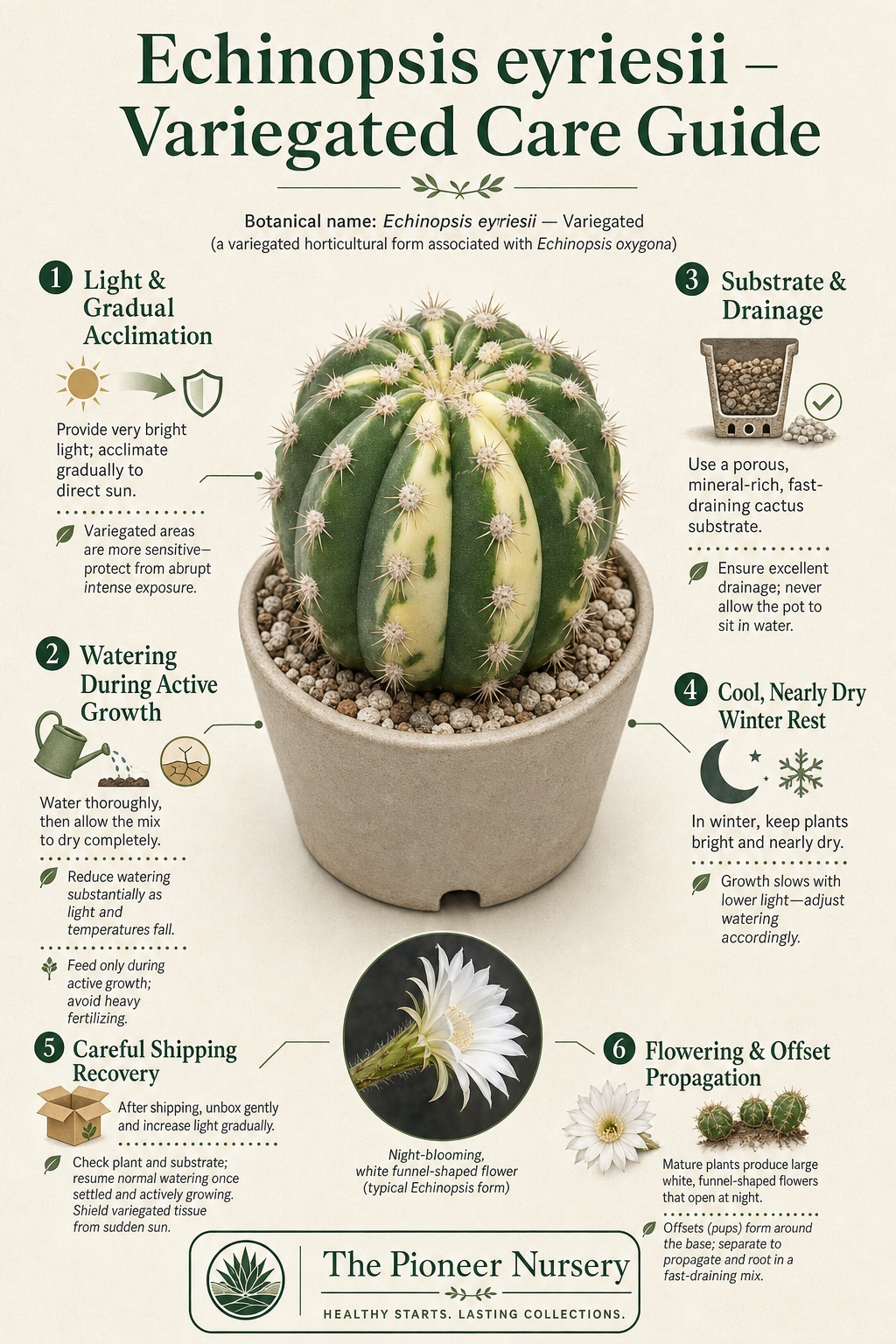
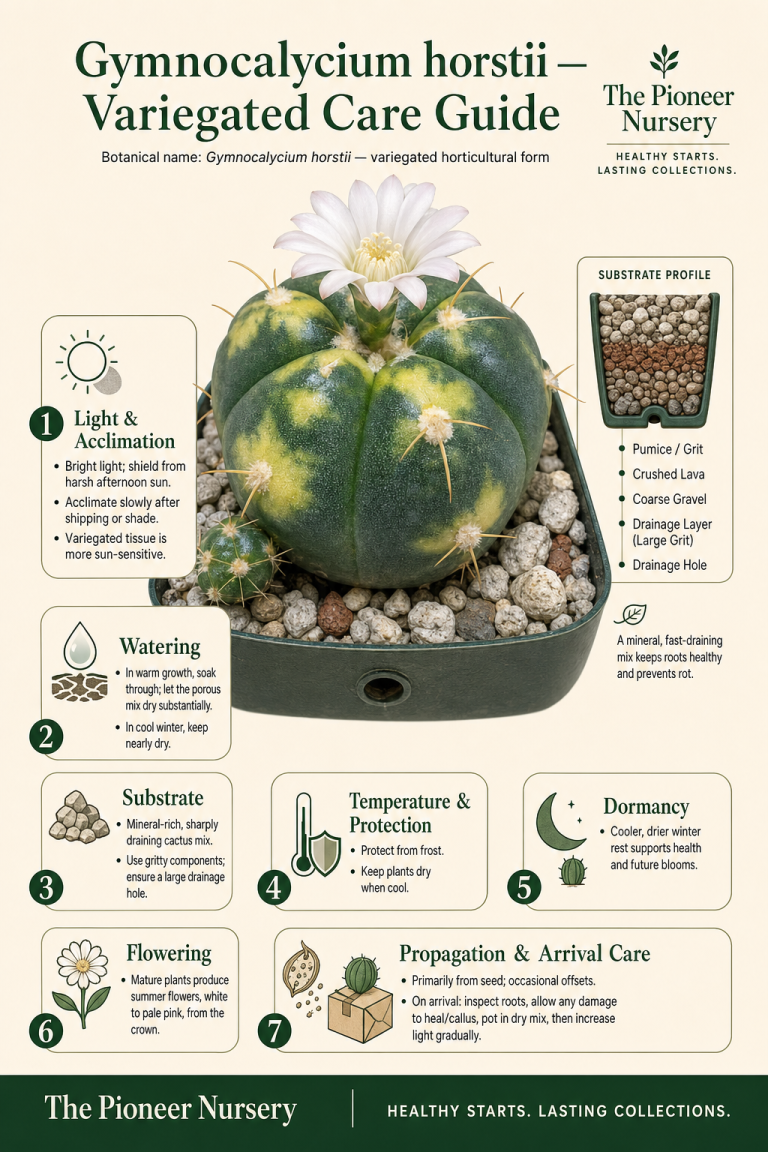
Echinopsis eyriesii — Variegated is a variegated horticultural form of Echinopsis oxygona, also treated under the submitted name Echinopsis eyriesii. Its reduced-chlorophyll pale areas make gradual light acclimation especially important, while its fibrous-rooted Echinopsis growth habit favors porous soil, complete drying between active-season waterings, and careful winter watering. With strong light and a cool, relatively dry rest, mature plants may produce large, fragrant white flowers at night.
Quick Care Summary
- Provide very bright light and acclimate gradually to direct sun.
- Give variegated areas extra protection from abrupt intense exposure.
- Use porous, mineral-rich, fast-draining cactus substrate.
- Water thoroughly during active growth, then allow the mix to dry completely.
- Reduce watering substantially as light and temperatures fall.
- Keep cool winter plants bright and nearly dry.
- Feed only during active growth and avoid heavy fertilizing.
About the plant
“Variegated” describes a color form with areas of reduced chlorophyll; it is not a separate species. The submitted name Echinopsis eyriesii is treated by Kew as a synonym of Echinopsis oxygona, while the historical name remains documented and is retained here for nursery identity. The amount of green tissue varies among plants, so growth rate and sun tolerance can differ. Stable patterned pale and green tissue should not be confused with temporary yellowing, sun damage, nutrient stress, or disease-related chlorosis.
Light
Provide very bright light with several hours of gentle direct sun once the plant is acclimated. After shipping or greenhouse growing, begin with filtered light or light afternoon shade and increase exposure gradually. Acclimate variegated tissue more slowly than a fully green plant because pale sectors can scorch more readily. Inadequate light may cause weak, elongated growth.
Watering
During active growth, water thoroughly until excess drains from the pot, then allow the substrate to dry completely before watering again. Avoid repeated shallow watering and never leave the pot standing in water. As light and temperatures fall, reduce watering substantially. During a cool winter rest, keep the plant nearly dry and provide only enough water to prevent severe shriveling. Resume more regular watering gradually when warmth, light, and new growth return.
Soil and substrate
Use a porous, fast-draining cactus mix containing substantial mineral material such as pumice, perlite, coarse grit, or coarse sand. The substrate should hold enough moisture for active growth without staying wet around the fibrous roots. Dense, slow-draining soil increases the risk of root or stem rot.
Potting and roots
Choose a container with an unobstructed drainage hole and only moderately more room than the root system requires. Echinopsis has fibrous roots and does not need an unusually deep taproot pot. Repot when the substrate has degraded, the plant has outgrown its container, or drainage has declined. After significant root disturbance, keep the plant dry while damaged roots callus, then resume watering cautiously.
Temperature and winter rest
Protect the plant from freezing and prolonged cold, wet conditions. Growth commonly slows in winter as light and temperatures decrease. A cool, bright rest is beneficial; when kept cool, a practical winter range is approximately 7–13°C (45–55°F), safely above 0°C/32°F. Keep the plant nearly dry during this period.
Fertilizer
Feed only during active growth. Use a balanced or cactus fertilizer diluted to approximately half strength for two or three spring and summer applications. Do not fertilize during dormancy, and avoid heavy feeding, particularly because variegated specimens may grow more slowly.
Flowering
Mature plants can produce large, fragrant, funnel-shaped white flowers that generally open at night in spring or summer. Strong light, active-season growth, and a cool, relatively dry winter rest support flowering.
Propagation
Propagation is possible by offsets or seed. Separate sufficiently developed offsets, allow cut surfaces to dry, and plant them in a well-drained medium. Seedlings should not be assumed to reproduce the parent plant’s variegation, so offsets are generally the more practical choice for preserving the visible form.
Shipping and arrival care
Inspect the plant after arrival for crushing, cold injury, moisture, and root damage. Following bare-root shipment or significant root disturbance, allow wounds to dry, pot into a dry porous substrate, and delay heavy watering until recovery and root activity are evident. Acclimate gradually to stronger light, using extra caution around the pale variegated sectors. Shipping recovery needs vary with the plant’s condition and season.
Common problems
Root or stem rot usually relates to dense substrate, poor drainage, or watering while the plant is cold and inactive. Sunburn can follow an abrupt move from low light or greenhouse shade into intense direct sun, with variegated areas often more vulnerable. Weak, elongated growth indicates inadequate light. Mealybugs and scale may be more likely on crowded or stressed plants.
Frequently Asked Questions
How should I acclimate this variegated cactus to sunlight?
Start with filtered light or light afternoon shade, then increase exposure gradually. Variegated tissue can scorch more readily than fully green tissue.
How often should I water it?
During active growth, water thoroughly and wait until the substrate has dried completely before watering again. Water much less as light and temperatures fall, and keep a cool winter plant nearly dry.
Does it need a deep pot?
No. Its fibrous roots do not require an unusually deep taproot pot. Use a moderately sized container with an unobstructed drainage hole.
Will seedlings keep the parent plant’s variegation?
Do not assume they will. Offsets are generally more practical when the goal is to preserve the visible variegated form.
Can it flower indoors or in cultivation?
Mature plants can produce fragrant, white, funnel-shaped flowers that generally open at night in spring or summer. Strong light, active growth, and a cool, relatively dry winter rest support flowering.
The key to this variegated Echinopsis is balance: give it strong light, but acclimate slowly; water thoroughly in active growth, but let the substrate dry fully; and keep it cool and nearly dry during winter. Pay particular attention to pale tissue, drainage, and recovery after shipping or root disturbance.