Opuntia Care Guide
Learn how to grow Opuntia, commonly called prickly pear cactus, with guidance on light, watering, drainage, winter care, propagation, and the important variation among species and selections.
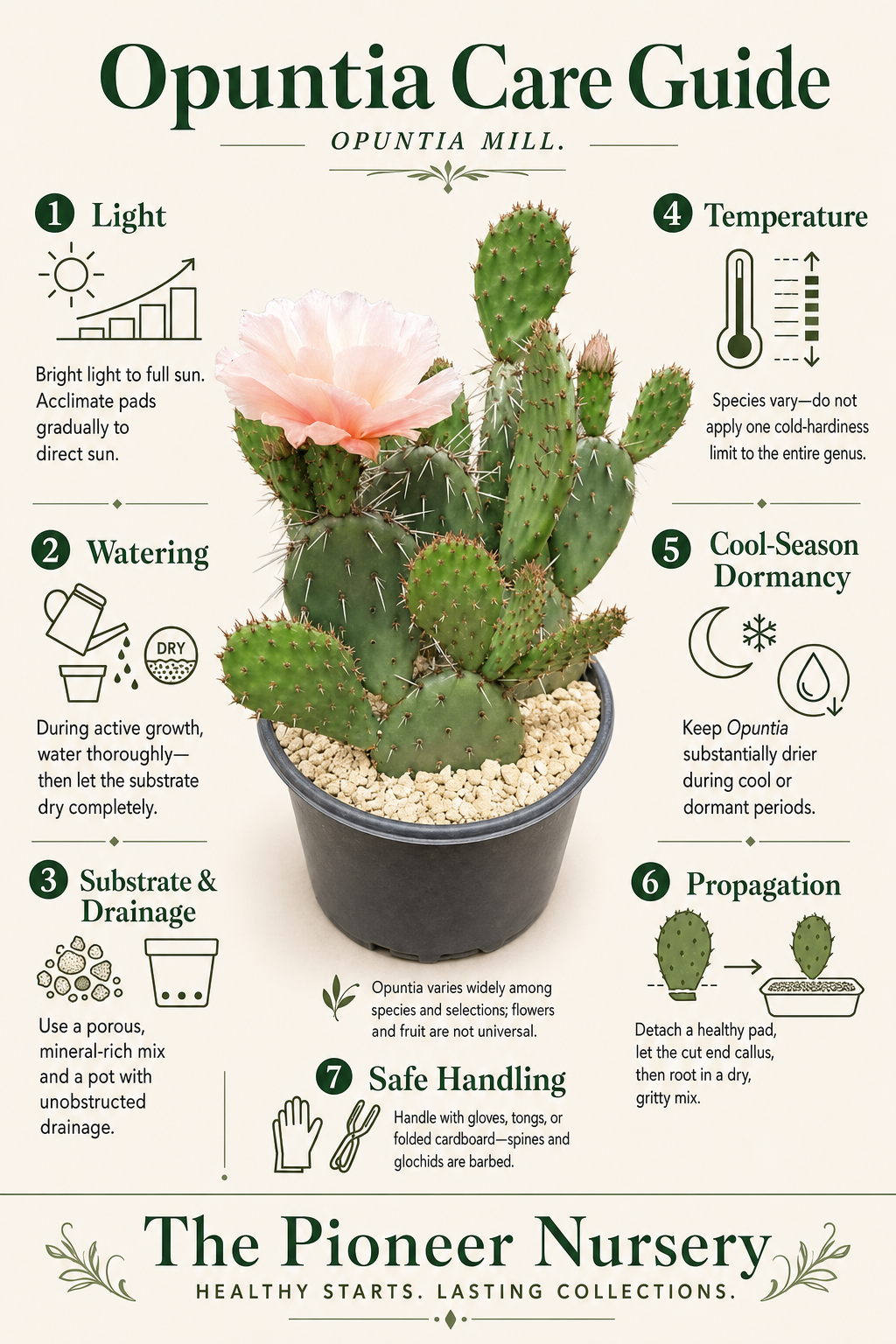
Opuntia is a large, variable cactus genus commonly known as prickly pear, nopal, or prickly pear cactus. Most Opuntia appreciate strong light, fast drainage, thorough watering during active growth, and a completely dry substrate before watering again. Because the genus includes both cold-hardy North American types and frost-sensitive tropical or subtropical plants, temperature and winter care must be adapted to the individual species or selection.
Quick Care Summary
- Provide bright light to full sun, with gradual acclimation to direct light.
- Water thoroughly during active growth, then let the substrate dry completely.
- Keep Opuntia substantially drier during cool or dormant periods.
- Use a porous, mineral-rich substrate and a pot with unobstructed drainage.
- Do not apply one cold-hardiness limit to the entire genus.
- Handle pads with gloves, tongs, or folded cardboard because of spines and glochids.
- Propagate commonly from callused stem pads or segments.
About Opuntia
Opuntia includes many cactus species native to the Americas, with substantial variation in size, growth form, flowering, fruiting, dormancy, and cold tolerance. Opuntia may have segmented stem growth, spines, and tiny barbed glochids. The submitted name “Opuntia Pina Colada” is best treated as a commercial or horticultural selection name within Opuntia, not as a species identity. This guide covers genus-level care and should not be used to assume that every Opuntia selection has the same hardiness or appearance.
Light
Provide bright light to full sun, especially outdoors. Several hours of direct sun is a useful general target, but acclimate gradually after shipping, indoor cultivation, or extended shade. Sudden exposure to strong sun can cause sunburn. Some Opuntia tolerate partial shade better than others, so adjust light according to the individual plant and climate. Indoors, insufficient light may cause weak, elongated growth.
Watering
During active growth, water thoroughly and then allow the substrate to dry completely before watering again. Do not follow a fixed calendar: watering frequency depends on temperature, light, pot size, substrate, and rainfall. Reduce watering substantially during cool or dormant periods, keeping plants nearly dry in cold weather. Saturated soil combined with cold conditions creates a major rot risk.
Soil and Substrate
Use a porous, rapidly draining cactus mix with substantial mineral material such as pumice, perlite, lava rock, coarse sand, or similar components blended with a modest amount of organic potting medium. Opuntia can tolerate sandy, rocky, loamy, and somewhat alkaline soils, but prolonged saturation should be avoided.
Potting and Roots
Choose a container with unobstructed drainage holes and avoid oversized pots that stay wet for too long. Root depth varies among species. Repotting during active growth can be practical. Handle pads and spines with thick gloves, tongs, or folded cardboard. If roots are damaged or heavily disturbed, allow them to dry and callus before returning to normal watering.
Temperature and Winter Care
Temperature tolerance varies widely across Opuntia. Some North American species and selected hybrids are highly cold hardy, while tropical and subtropical species can be damaged by frost. Do not apply one minimum temperature to the entire genus. Outdoor planting should be limited to taxa verified for the local winter climate. Acclimated, established plants generally handle cold better when kept dry, and winter drainage is especially important.
Seasonal Growth and Dormancy
Many temperate and desert Opuntia slow down or enter dormancy during cool, short-day winters. Some tropical species may continue limited growth in warm conditions. During dormancy, provide strong light, cooler conditions when appropriate, and very limited irrigation. Resume more active watering only as growth and environmental conditions support it.
Fertilizer
Fertilize only during active growth using a dilute, balanced or cactus-appropriate fertilizer. A quarter-strength application is a conservative general approach. Avoid excessive nitrogen, which can encourage weak, overly succulent growth. Do not fertilize plants that are drought-stressed, recently repotted, dormant, or cold.
Flowering and Fruiting
Opuntia flowering is generally seasonal and commonly occurs on mature or outer stem pads, but timing, flower color, flower size, and reliability vary greatly among species and cultivars. Individual flowers may last about one day, while a plant may produce flowers over several weeks. Some Opuntia produce fleshy fruits, but fruiting and fruit quality are not consistent across all cultivated plants.
Propagation
Stem-pad or segment propagation is the most practical genus-wide method. Allow a detached pad or cutting to callus before placing it in a dry, porous rooting medium. Begin cautious watering only when rooting conditions are favorable. Seed propagation is also possible, but it may be slower or less uniform, and some species have difficult germination.
Shipping and Arrival Care
Inspect the plant after arrival and handle it carefully: Opuntia may have both large spines and tiny barbed glochids that attach easily to skin and clothing. Protect bare-root or pad shipments from crushing, prolonged moisture, and extreme temperatures. Start with bright indirect light or filtered sun, then acclimate gradually to direct sun. Do not water immediately after major root damage or while the plant is cold and poorly ventilated.
Common Problems
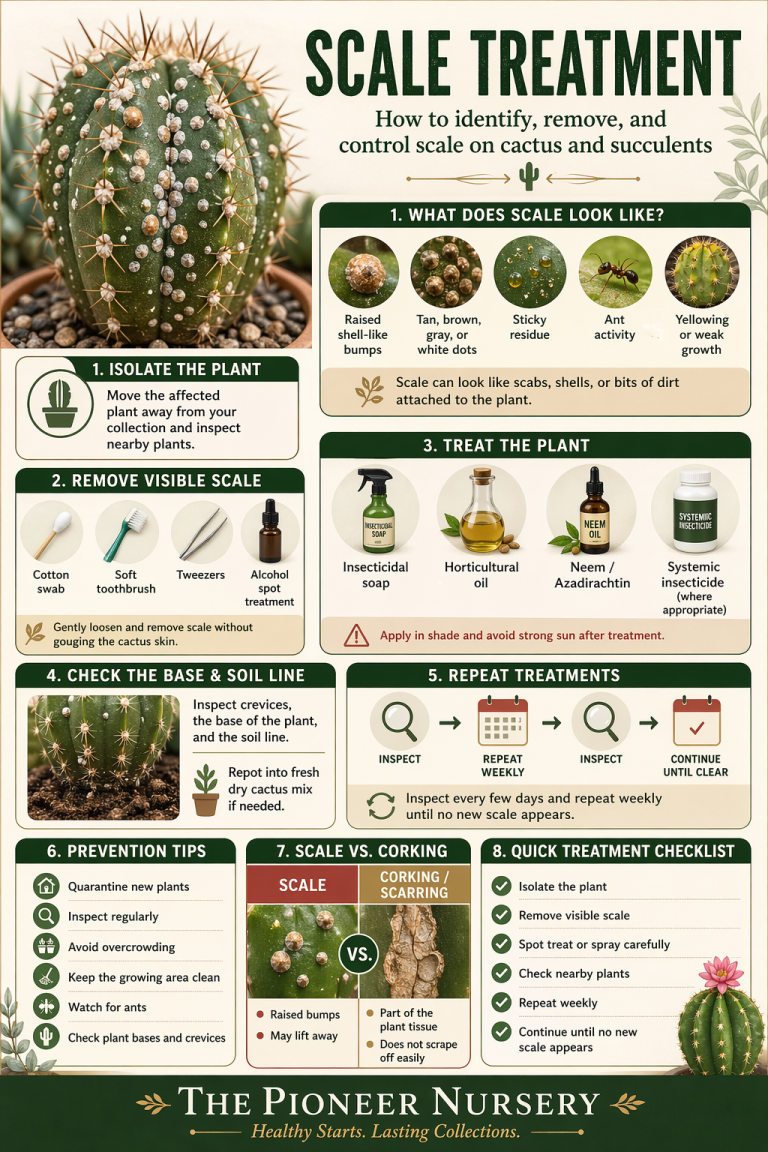
Root or stem rot usually relates to saturated soil, poor drainage, or watering during cold conditions. Sunburn can follow an abrupt move from shade or indoor light to strong direct sun. Mealybugs, scale, cochineal insects, and other sap-feeding pests may occur, so inspect the plant regularly. Spines and glochids can cause painful irritation; use protective equipment when handling. Weak, elongated indoor growth may occur when light is insufficient.
Frequently Asked Questions
How often should I water Opuntia?
Water thoroughly during active growth, then wait until the substrate has dried completely. Frequency depends on light, temperature, pot size, substrate, and rainfall rather than a fixed schedule. Water much less during cool or dormant periods.
Can every Opuntia grow outdoors in winter?
No. Cold tolerance varies widely. Some North American species and selections are highly cold hardy, while tropical and subtropical types may be frost-sensitive. Verify the individual plant before outdoor planting, and keep winter conditions well drained and appropriately dry.
Does Opuntia need full sun?
Bright light to full sun is the general pattern, though some species tolerate partial shade. Acclimate gradually after shipping, indoor growth, or extended shade to reduce sunburn.
What is the easiest way to propagate Opuntia?
Stem-pad or segment propagation is generally the most practical method. Let the detached pad or cutting callus, place it in dry porous medium, and begin cautious watering only when rooting conditions are favorable.
Why should I be careful when handling Opuntia?
Many Opuntia have large spines as well as tiny barbed glochids that can attach to skin and clothing. Use thick gloves, tongs, or folded cardboard when moving or repotting plants.
Opuntia care is built around strong light, excellent drainage, careful seasonal watering, and respect for the plant’s spines and glochids. Always adapt the routine to the individual species or selection, especially when judging cold tolerance, dormancy, flowering, and outdoor suitability.