Euphorbia japonica Care Guide
Euphorbia japonica is used both for the accepted species Euphorbia jolkinii and for a commonly traded caudiciform hybrid. Confirm the plant’s identity before applying this conservative hybrid-oriented care profile.
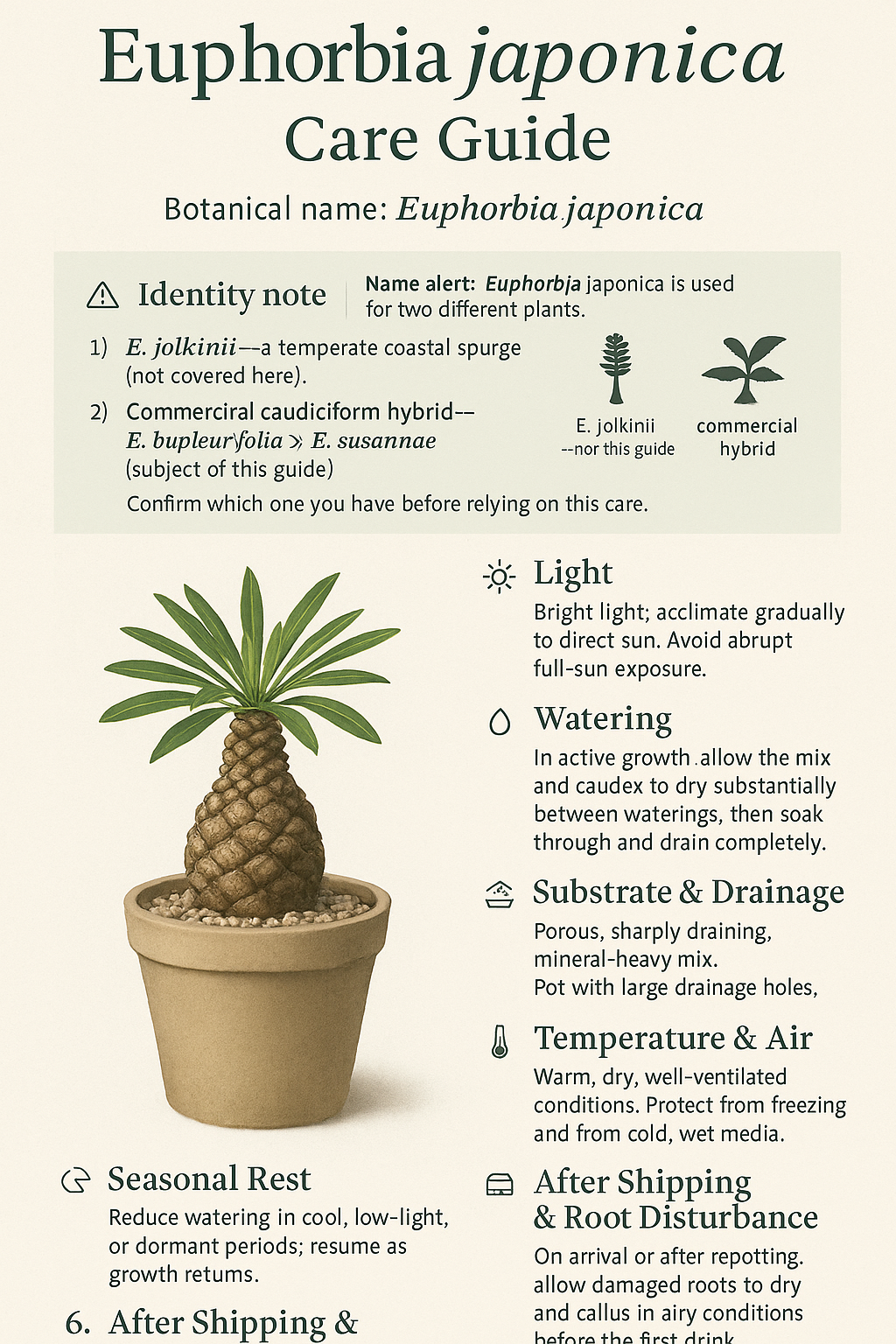
The name Euphorbia japonica has two documented uses. Botanically, it is treated as a synonym of Euphorbia jolkinii, a temperate East Asian perennial. In succulent commerce, the name is also used for the caudiciform hybrid Euphorbia bupleurifolia × Euphorbia susannae, often called Cocklebur or Pineapple Euphorbia. Because these plants differ substantially, this guide provides a conservative care profile primarily for the commonly traded caudiciform hybrid and should not be treated as verified species-specific care for E. jolkinii until the plant’s identity is confirmed.
Quick Care Summary
- Confirm whether the plant is E. jolkinii or the caudiciform hybrid before relying on this guide.
- Give the caudiciform hybrid bright light with gradual acclimation to direct sun.
- Use a porous, sharply draining, mineral-heavy substrate.
- Water substantially dry roots during active growth, then drain completely.
- Reduce watering in cool, low-light, or dormant conditions.
- Protect the hybrid from freezing and cold, wet conditions.
- Handle Euphorbia latex carefully with gloves and eye protection.
About the plant and its identity
Euphorbia japonica is not a resolved identity for every nursery plant sold under that name. Kew and ITIS treat Euphorbia japonica Siebold ex Boiss. as a synonym of Euphorbia jolkinii. Succulent and nursery sources also use the name for Euphorbia bupleurifolia × Euphorbia susannae, a commercial caudiciform hybrid. Confirm the supplier record, accession information, or plant appearance before relying on this guide.
Light
For the commonly traded caudiciform hybrid, provide bright light with several hours of direct sun after gradual acclimation. Plants arriving from shipping or lower-light conditions can sunburn if moved abruptly into intense afternoon sun. The light requirements of E. jolkinii should not be assumed to match this hybrid profile.
Watering
During active growth, water the caudiciform hybrid thoroughly only after the substrate has dried substantially, and let excess water drain completely. Reduce watering during cool, low-light, or dormant periods. Avoid continuously wet roots, especially when conditions are cold. Species-specific watering for E. jolkinii was not adequately verified.
Soil and substrate
Use a very porous, sharply draining, mineral-heavy succulent substrate with plenty of air space around the roots. Avoid peat-heavy or water-retentive mixes. Adjust the substrate to the container, climate, airflow, and growing area.
Potting and roots
Choose a container with drainage and enough depth for the enlarged root or caudex structure, but avoid an oversized pot that remains wet for extended periods. Repot when the plant is actively growing or when the substrate has deteriorated. After major root disturbance, keep the plant dry until damaged roots have callused, then resume watering cautiously.
Temperature and seasonal growth
Protect the caudiciform hybrid from freezing and cold, wet conditions. Warm, bright, well-ventilated conditions are preferable. Exact minimum temperatures were not adequately verified. The hybrid is reported to grow more actively in warm seasons and to need substantially less water in winter. Leaf loss can occur after shipping, stress, or seasonal rest. Do not apply this growth cycle automatically to E. jolkinii.
Fertilizer
During active growth, use a dilute, balanced or low-nitrogen succulent fertilizer. Do not fertilize dry, dormant, recently shipped, or recently repotted plants. Taxon-specific fertilizer trials were not located.
Flowering
Euphorbia flowers are produced in cyathia rather than conventional single flowers. Flowering reports for the commercial hybrid are inconsistent and may be limited in containers or low light. E. jolkinii has been reported flowering in spring, but that information applies to the East Asian species and not necessarily to the hybrid.
Propagation and safety
The hybrid may be propagated vegetatively when healthy material is available, but reliable instructions specific to this hybrid were not located. Seed propagation would not reliably reproduce a selected hybrid phenotype. Euphorbia latex can irritate or harm skin and eyes; wear gloves and eye protection when taking cuttings, and keep the plant away from children and pets.
Shipping and arrival care
Receive and acclimate the caudiciform hybrid in warm, dry, well-ventilated conditions. Inspect the plant for damage or rot and introduce it gradually to brighter light. Bare-root or disturbed plants may shed leaves. Do not immediately saturate a plant with damaged or recently disturbed roots; allow wounds to dry before cautious watering.
Common Problems
- Root or caudex rot can result from waterlogged substrate, poor drainage, or cool wet conditions.
- Sunburn may follow an abrupt move from shade or shipping conditions into intense direct sun.
- Leaf drop may follow shipping, drought stress, temperature changes, or seasonal rest.
- Mealybugs, scale, and other sap-feeding pests may occur under protected cultivation.
- Milky Euphorbia latex can irritate skin and eyes and should be kept away from children and pets.
Frequently Asked Questions
Why does this guide say Euphorbia japonica may be two different plants?
The name is treated botanically as a synonym of Euphorbia jolkinii, but succulent commerce also uses it for Euphorbia bupleurifolia × Euphorbia susannae. These plants differ substantially, so the nursery identity should be confirmed.
How should the commonly sold caudiciform hybrid be watered?
Water thoroughly during active growth only after the substrate has dried substantially. Reduce watering during cool, low-light, or dormant periods and avoid cold, wet roots.
Can the plant go directly into strong sun after shipping?
No. Acclimate it gradually, because an abrupt move from shipping or shade conditions into intense direct sun can cause sunburn.
Why might the plant lose leaves?
Leaf loss may follow shipping, drought stress, temperature changes, or seasonal rest in the commonly traded hybrid.
Is Euphorbia japonica safe to handle?
Euphorbia latex can irritate skin and eyes. Wear gloves and eye protection when taking cuttings, and keep the plant away from children and pets.
Before publication or final placement, confirm whether the nursery plant is Euphorbia jolkinii or the commercially circulating Euphorbia bupleurifolia × Euphorbia susannae hybrid. Their care needs are not interchangeable.