Copiapoa hypogaea Care Guide
Learn how to grow Copiapoa hypogaea, the underground copiapoa, with guidance on bright light, fast drainage, careful watering, root-sensitive potting, and a cool, dry winter rest.
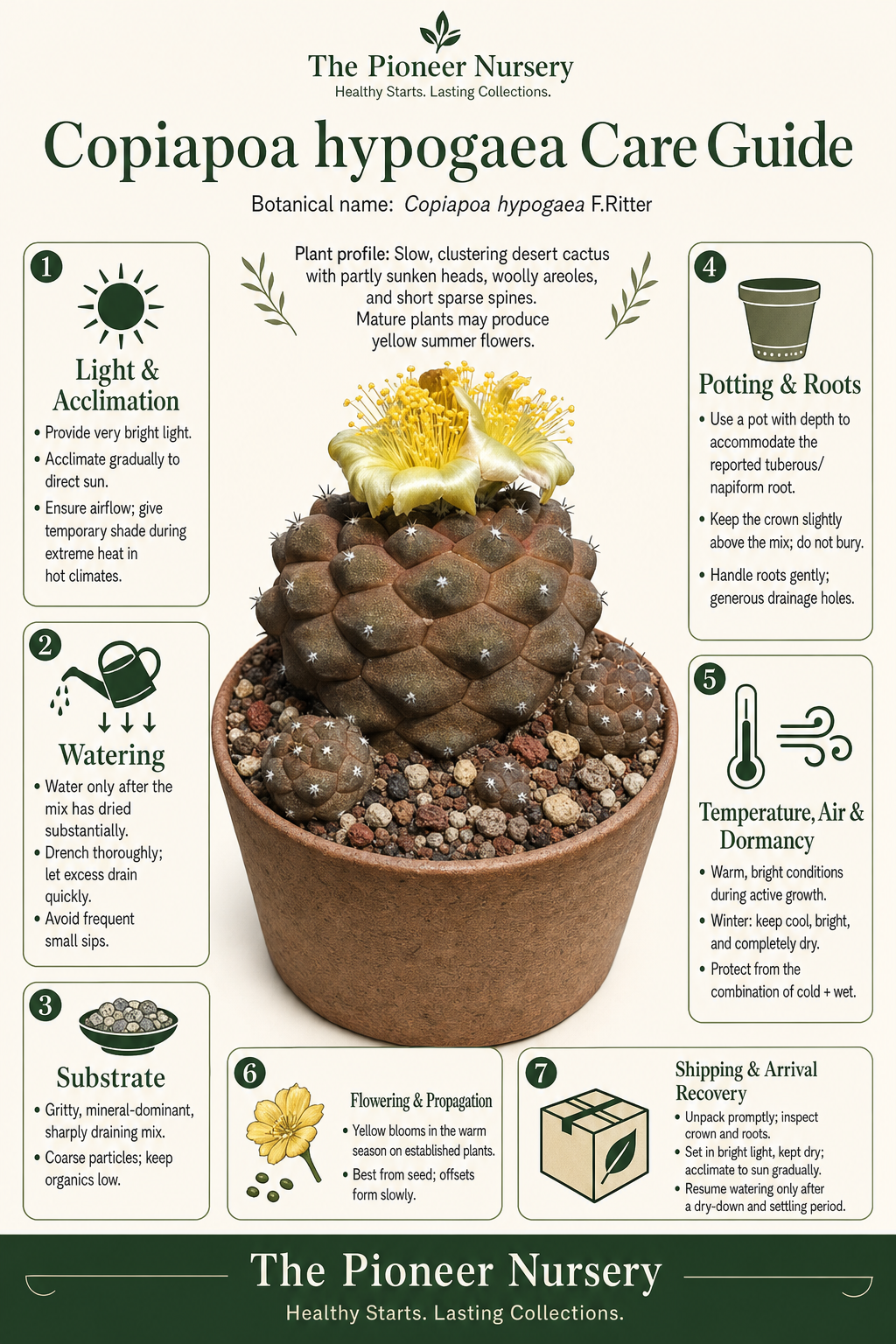
Copiapoa hypogaea F.Ritter, commonly called underground copiapoa, is a slow-growing, clumping desert cactus from northern Chile. Its partly sunken growth habit, woolly areoles, and yellow summer flowers make it distinctive in cultivation. The main care priorities are very bright but acclimated light, rapid drainage, careful watering during active growth, and a cool, completely dry winter rest.
Quick Care Summary
- Provide very bright light, with gradual acclimation to direct sun.
- Use a gritty, sharply draining substrate with substantial mineral content.
- Water only after the medium has dried substantially or completely during active growth.
- Allow rapid drainage and avoid frequent small waterings.
- Keep the plant cool, bright, and completely dry during winter dormancy.
- Protect from the combination of cold and wet conditions.
- Provide airflow and manage intense summer heat in hot climates.
- Handle the reported tuberous or napiform root carefully when potting.
About Copiapoa hypogaea
This species develops clustered plants with partly underground or sunken stems. A tuberous or napiform root is reported for the species, although descriptions of Copiapoa root systems are not completely uniform. Use careful, minimally disruptive potting practices and provide enough depth for the root system without using an oversized container.
Light
Provide very bright light, including full sun where temperatures, airflow, and acclimation permit. Plants arriving from lower light or shipping should be introduced to direct sun gradually. In hot climates or poorly ventilated greenhouses, protect the plant from the most intense afternoon heat while maintaining strong overall light.
Watering
Water during active growth only after the substrate has dried substantially or completely. Soak thoroughly, allow rapid drainage, and let the medium dry fully before watering again. Avoid frequent small sips and continuously moist roots. Reduce watering in cool conditions and keep the plant dry during winter dormancy.
Soil and substrate
Use a sharply draining, gritty cactus substrate with high mineral content and limited water-retentive organic matter. Commercial cactus compost amended with substantial perlite or another mineral aggregate is suitable. In humid conditions or where the mix dries slowly, use a more mineral-dominant substrate.
Potting and roots
Choose a pot with excellent drainage and enough depth and volume for the reported tuberous or napiform root. Do not compress the root into a shallow container, but avoid oversized pots that stay wet for extended periods. Repot only when necessary and handle the roots carefully.
Temperature and airflow
Keep the plant warm and dry during active growth with abundant airflow. It is not reliably frost-hardy in cultivation; use a conservative minimum of approximately 5–10°C (41–50°F), always with a dry substrate. Avoid combining low temperatures with moisture. Excessive summer heat can also cause stress, so ventilation and temporary light diffusion may be needed.
Seasonal growth and dormancy
Provide a cool, bright, dry winter rest. In the Northern Hemisphere, this generally falls in late autumn through winter, but local temperature and light conditions should guide the timing rather than a fixed calendar. Resume watering cautiously as active growth returns and the plant is warm enough to use it.
Fertilizer
During active growth, apply a dilute, low-nitrogen cactus fertilizer occasionally to an already-moistened, actively growing plant. Avoid heavy feeding, especially when using organic or moisture-retentive media.
Flowering
Mature, slow-growing clustered plants can produce yellow flowers in summer. Strong light, mature growth, a pronounced dry rest, suitable temperatures, and good airflow may support flowering, although flowering can be inconsistent in cultivation.
Propagation
Propagation from seed is recommended at approximately 19–24°C (66–75°F). Offsets may be removed and rooted when available. Grafting is also possible, but it is an optional horticultural method rather than a requirement for maintaining the species.
Shipping and arrival care
Inspect the plant after arrival and keep it protected from freezing temperatures, crushing, and prolonged confinement in humid packaging. After bare-root shipping or significant root disturbance, damaged roots should dry and callus before potting or watering. After repotting, delay watering until wounds have healed and the plant is stable in a rapidly draining medium. Acclimate gradually to strong direct light.
Common Problems
- Root or basal rot: Usually associated with overwatering, poor drainage, or wet conditions during cool weather.
- Sunburn or heat stress: Can follow sudden exposure to intense sun, especially with inadequate ventilation.
- Mealybugs: Monitor carefully, particularly when plants are grown under glass.
- Slow growth or delayed flowering: May result from insufficient light.
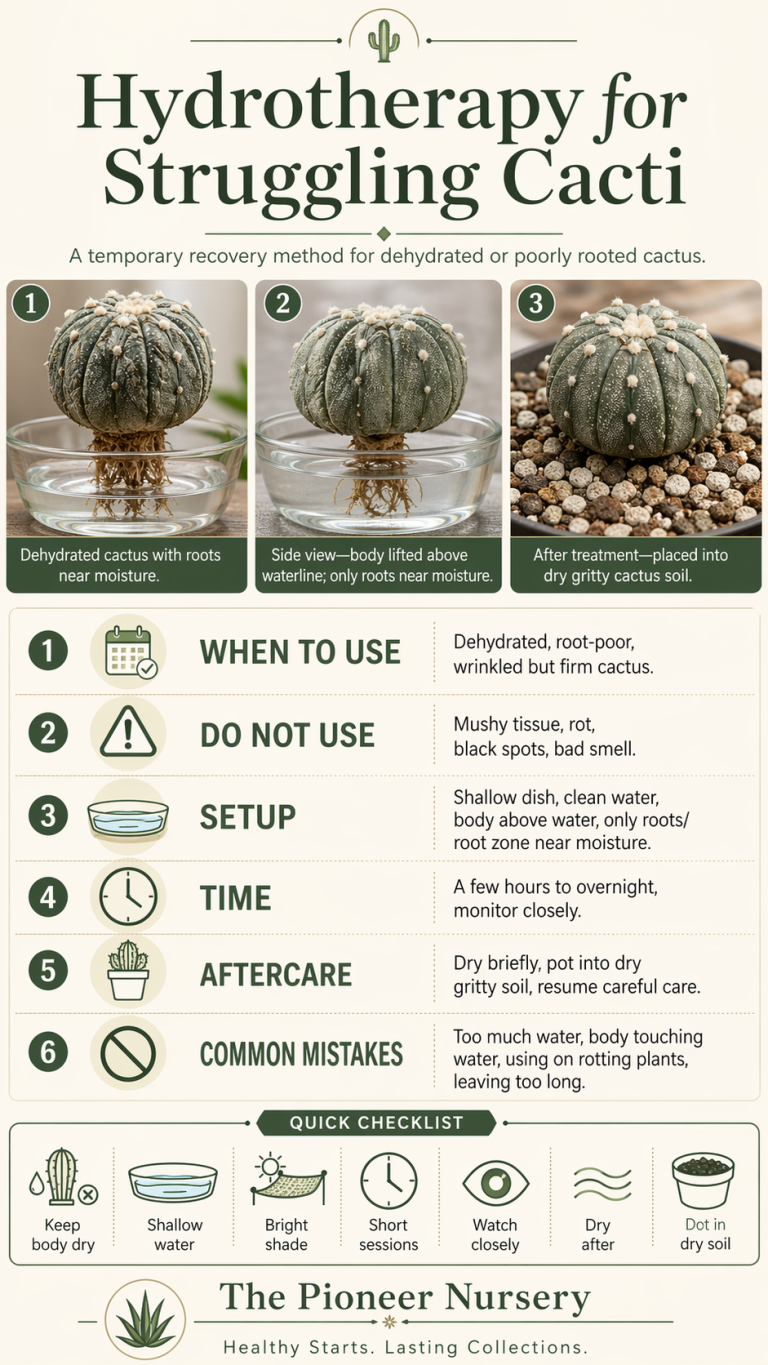
- Splitting or decline: A severely dehydrated plant can be damaged by rapid rehydration.
Frequently Asked Questions
How often should I water Copiapoa hypogaea?
Do not follow a fixed schedule. During active growth, water only after the substrate has dried substantially or completely, then allow full dry-down before watering again. Keep it dry during cool winter dormancy.
Can Copiapoa hypogaea take full sun?
It can receive full sun where temperatures, airflow, and acclimation permit. Introduce shipped or lower-light plants gradually, and provide protection from the most intense afternoon heat in hot or poorly ventilated settings.
Does this plant need a deep pot?
Provide enough depth for its reported tuberous or napiform root, while avoiding an oversized container that stays wet. Root descriptions vary, so prioritize excellent drainage and careful handling.
Should I water after repotting?
After significant root disturbance or repotting, delay watering until damaged areas have healed and the plant is stable in a rapidly draining medium.
How can I encourage flowering?
Mature growth, strong light, a pronounced dry rest, suitable temperatures, and good airflow may support yellow summer flowers, although flowering is not guaranteed in cultivation.
Can Copiapoa hypogaea be propagated from offsets?
Offsets may be removed and rooted when available. Seed propagation at approximately 19–24°C (66–75°F) is also supported, and grafting is an optional method.
Copiapoa hypogaea responds best to restraint: strong acclimated light, excellent drainage, thorough dry-down between active-season waterings, and a genuinely dry winter rest. Watch the interaction between temperature, airflow, and moisture, especially around shipping, repotting, and seasonal transitions.