Echinopsis lageniformis (Bolivian Torch Cactus) Care Guide
Learn how to grow Echinopsis lageniformis, the Bolivian torch cactus, with guidance on bright light, fast drainage, seasonal watering, winter rest, and shipping recovery.
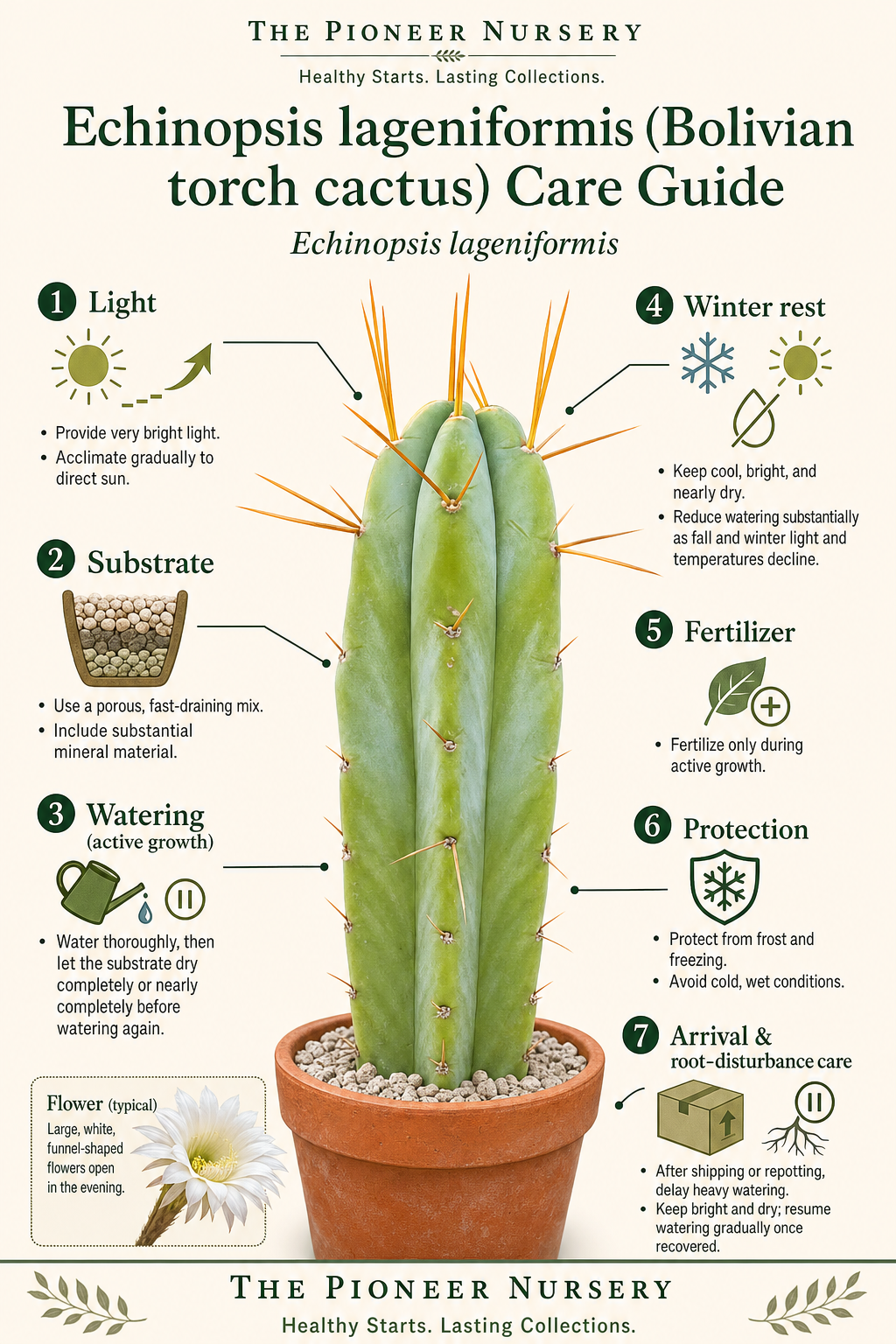
Echinopsis lageniformis, commonly called Bolivian torch cactus, is a succulent, tree-like or columnar cactus native to Bolivia. Its most important care requirements are very bright light, a porous substrate that dries readily, careful watering during active growth, and a substantially drier winter rest. Older labels and literature may use Trichocereus bridgesii; this reflects differing generic treatments rather than a reason to replace the submitted botanical identity.
Quick Care Summary
- Provide very bright light with gradual acclimation to direct sun.
- Use a porous, fast-draining substrate with substantial mineral material.
- During active growth, water thoroughly and let the substrate dry completely or nearly completely.
- Reduce watering substantially as fall and winter light and temperatures decline.
- Keep the plant nearly dry during a cool, bright winter rest.
- Protect it from frost and freezing temperatures.
- Delay heavy watering after shipping, repotting, or major root disturbance.
About Echinopsis lageniformis
This columnar cactus is a Bolivian species with a succulent, tree-like growth habit. It is often encountered under the common name Bolivian torch or the older name Trichocereus bridgesii. The species name alone does not establish whether a particular plant is typical, monstrose, crested, variegated, grafted, or a named clone; those designations require separate verification.
Light
Provide very bright light with several hours of direct sun once the plant is acclimated. Plants arriving from shipping or moving from a greenhouse or shaded position should be introduced to stronger sunlight gradually. After hardening, full-sun exposure is appropriate. Abrupt changes can cause sunburn, while insufficient light can produce weak, etiolated growth.
Watering
During active growth, water thoroughly, then allow the substrate to dry completely or nearly completely before watering again. Never leave the container standing in water. As light and temperatures decline, reduce watering substantially. During a cool, bright winter rest, keep the plant nearly dry, giving only enough water to prevent severe shriveling when necessary. Cold, wet conditions increase the risk of rot.
Soil and substrate
Use a porous, fast-draining cactus mix containing substantial mineral or coarse-textured material, such as pumice, perlite, coarse grit, or decomposed granite. Avoid dense mixes that remain wet around the roots. Good drainage is especially important during dormancy and in cool conditions.
Potting and roots
Choose a stable container with an unobstructed drainage hole and a size appropriate for the columnar plant. Avoid unnecessarily oversized pots, which can retain excess moisture. Repot during active growth when practical and handle the roots carefully. After repotting or major root disturbance, keep watering restrained until the roots have had time to re-establish. Exact species-specific pot-depth requirements have not been established in the supplied research.
Temperature and winter rest
Protect Echinopsis lageniformis from frost and freezing temperatures. A warm, bright growing season is appropriate, followed where practical by a cooler, bright, dry winter rest. No dependable species-specific minimum temperature was established, so frost tolerance should not be assumed.
Seasonal growth and dormancy
Growth generally slows during fall and winter. Reduce irrigation as seasonal light and temperatures decline, and avoid treating the plant as though it were actively growing. Resume more substantial watering when brighter conditions and active growth return, always allowing the substrate to dry between waterings.
Fertilizer
Fertilize only during active growth, using a dilute, low-nitrogen cactus fertilizer or similarly restrained balanced fertilizer. Do not fertilize during winter dormancy, while the plant is stressed, immediately after shipping, or during substantial root recovery.
Flowering
Echinopsis and related columnar forms produce large, funnel-shaped flowers that commonly open at night or around dusk and last briefly. Mature growth, strong light, and a cool, dry winter rest may support flowering, but flowering behavior can vary among plants and cultivated lineages.
Propagation
Propagation may be carried out from seed or from stem cuttings. Allow a cutting’s cut surface to fully callus before placing it in a dry or barely moist, highly porous medium. Water cautiously until roots are established. Offsets may occur, but they are not guaranteed on every specimen. The cutting guidance comes from specialist cultivation information for the closely corresponding Trichocereus or Bridgesii horticultural group.
Shipping and arrival care
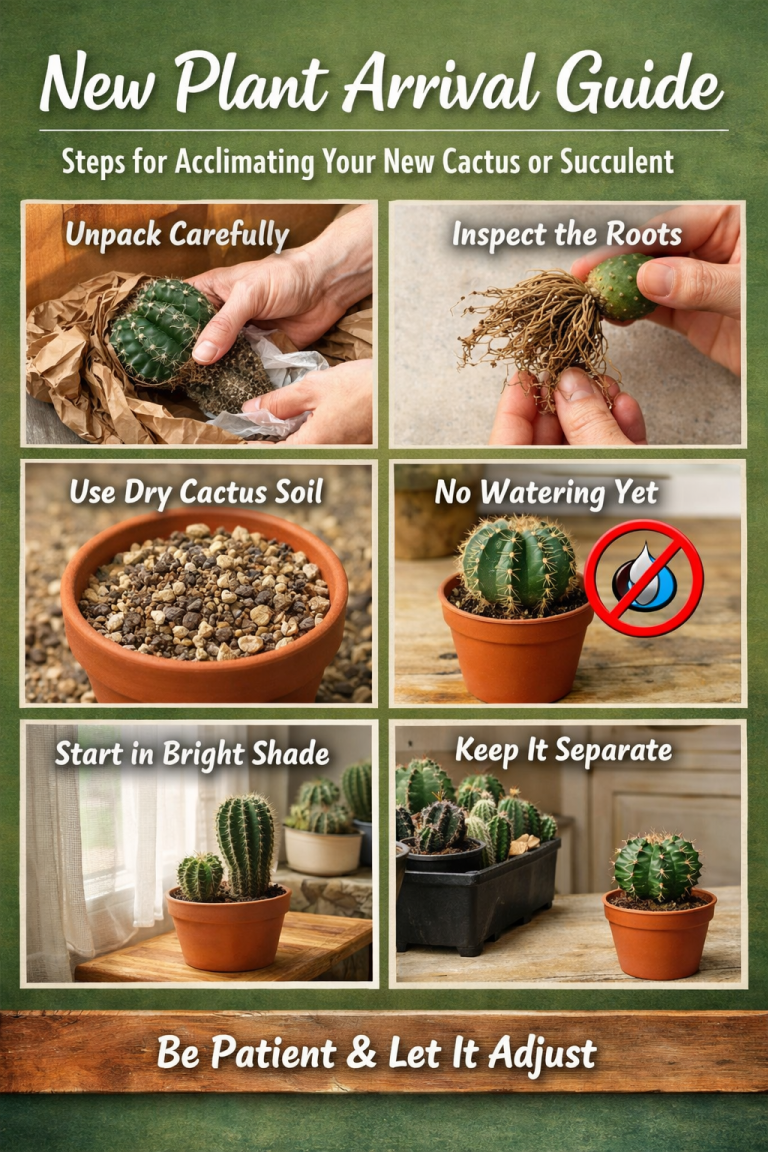
Inspect the plant after arrival and keep it protected from freezing temperatures and prolonged cold, wet conditions. Gradually acclimate it to stronger light rather than placing it immediately in intense direct sun. For bare-root plants or cuttings, allow appropriate callusing or recovery from root disturbance before substantial watering. Newly planted cacti should receive very little water until active root growth is evident.
Common Problems
- Root or stem rot can result from dense substrate, poor drainage, or watering while the plant is cold or dormant.
- Sunburn may occur after an abrupt move from shade, greenhouse protection, or shipping conditions into strong direct sun.
- Weak, etiolated growth usually indicates insufficient light during the active season.
- Monitor for mealybugs, scale, and other common cactus pests.
- Freeze injury can occur when the plant is exposed to frost or freezing temperatures.
Frequently Asked Questions
How often should I water Echinopsis lageniformis?
Do not use a fixed calendar. During active growth, water thoroughly after the substrate has dried completely or nearly completely. Water much less as light and temperatures decline, keeping the plant nearly dry during a cool winter rest.
Can Bolivian torch cactus take full sun?
Yes, full sun is appropriate once the plant has been hardened. Introduce plants from shipping, shade, or greenhouse conditions to stronger light gradually to reduce sunburn risk.
What soil should I use?
Use a porous, fast-draining cactus substrate with substantial mineral or coarse material such as pumice, perlite, coarse grit, or decomposed granite. Avoid mixes that stay wet around the roots.
Does it need a winter dormancy?
Growth generally slows in fall and winter. A cooler, bright, nearly dry winter rest is preferable where practical, with substantially reduced watering and no fertilizer.
How should I handle a shipped plant?
Inspect it on arrival, protect it from freezing and prolonged cold wet conditions, acclimate it gradually to stronger light, and delay heavy watering after root disturbance until recovery and active root growth are evident.
Can it be propagated from cuttings?
Stem cuttings can be propagated after the cut surface has fully callused. Root them in a dry or barely moist, highly porous medium and water cautiously until roots are established.
With strong light, excellent drainage, and watering that follows active growth rather than a fixed schedule, Echinopsis lageniformis can make a dependable columnar specimen. The main risks are abrupt sun exposure and moisture held around cold or disturbed roots.