Fockea crispa Care Guide
Learn how to grow Fockea crispa, a caudiciform vine with a rough, corrugated storage root, crinkled foliage, seasonal dormancy, and a preference for bright filtered light and sharply draining soil.
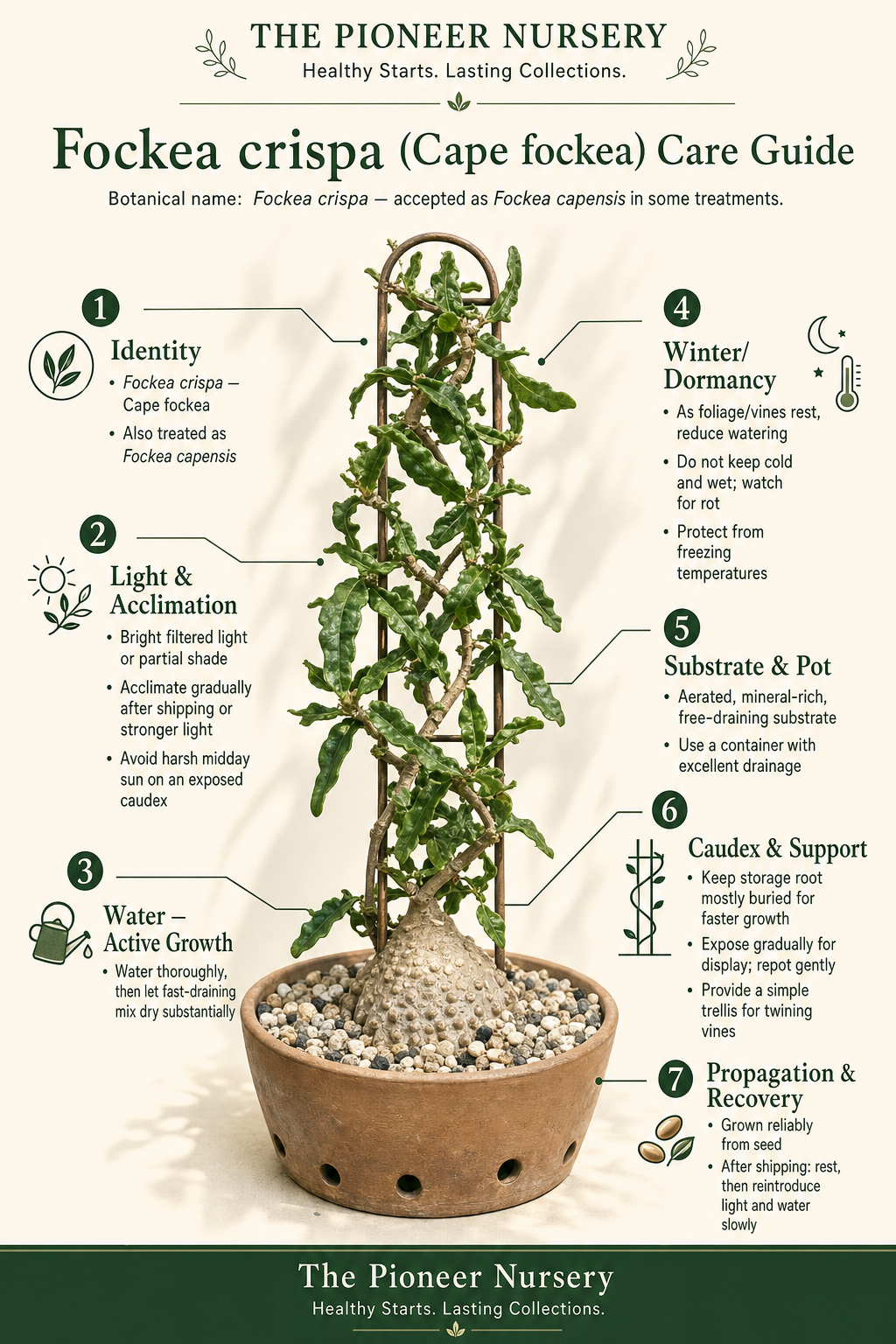
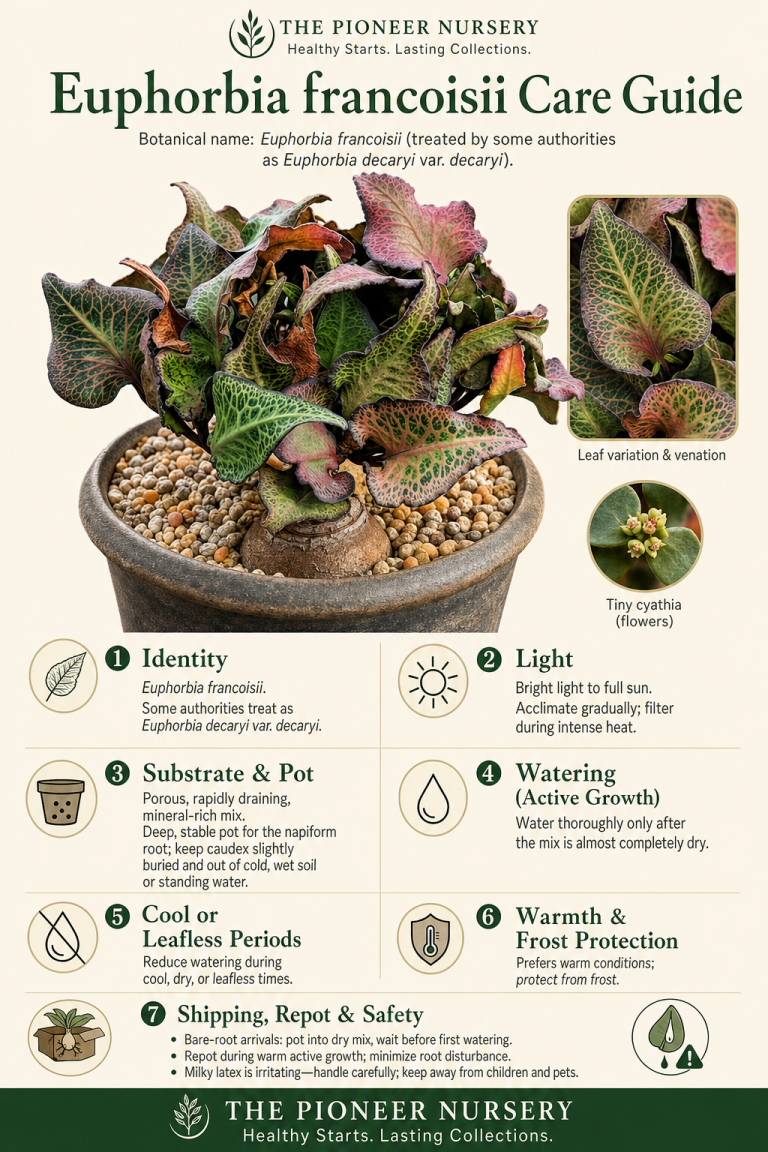
Fockea crispa, commonly called Cape fockea, is a caudiciform climbing plant grown for its enlarged, rough-textured storage root and twining vines with strongly crinkled or undulate leaves. The storage organ is primarily a tuberous root or caudex-like structure that naturally remains at least partly underground. Provide bright filtered light, excellent drainage, careful watering, and a drier winter rest. The name Fockea crispa is widely used in horticulture; Plants of the World Online treats it as a synonym of the accepted species Fockea capensis. Plants sold under this name can sometimes be confused with Fockea edulis, so specimen-level identification may require review.
Quick Care Summary
- Bright filtered light or partial shade is safest, especially for an exposed caudex.
- Acclimate gradually after shipping or a change to stronger light.
- Water thoroughly during active growth, then let the fast-draining substrate dry substantially.
- Reduce watering as foliage declines and keep the dormant plant from remaining continuously wet.
- Use an aerated, mineral-rich substrate and a container with excellent drainage.
- Keep the enlarged storage root substantially buried for faster growth; expose it gradually for display.
- Provide a trellis or support for the twining vines.
- Protect from freezing temperatures and avoid cold, wet soil.
About the Plant
Fockea crispa is a southern African climbing tuberous geophyte in the family Apocynaceae. Its enlarged storage root supports seasonal twining vines, and the foliage may decline or disappear during the cooler, darker season. A trellis or other support helps guide the vines. Keeping the storage organ substantially buried generally favors faster growth; gradual exposure is mainly a display and shaping practice.
Light
Provide bright light with filtered sun or partial shade. The vines can tolerate substantial light, but an exposed caudex may scorch or discolor under intense midday or full summer sun. Acclimate gradually after shipping or whenever the plant is moved to a brighter location.
Watering
During active growth, water thoroughly and let excess water drain freely. Allow the substrate to dry substantially before watering again. As foliage declines in autumn or winter, reduce irrigation and do not keep the dormant plant continuously wet. Cold combined with wet soil creates a significant risk of root or caudex rot.
Soil and Substrate
Use a very free-draining, aerated substrate with a substantial mineral component such as pumice, coarse perlite, grit, or similar aggregate. Avoid dense soil that stays wet around the tuberous root.
Potting and Roots
Choose a container with excellent drainage and enough depth or volume for the enlarged root without forcing it against the pot. Young plants generally grow faster when the caudex or tuber remains substantially buried. Repot cautiously because the specialized storage root is important for water storage and recovery.
Temperature and Seasonal Growth
Keep the plant warm during active growth and protect it from freezing temperatures. Brief exposure to temperatures in the upper 30s Fahrenheit may be tolerated by established plants, but cold, wet soil should be avoided. During the cooler, darker season, the plant may become semi-dormant or dormant and shed its leaves. Provide bright shelter and good airflow while reducing irrigation.
Fertilizer
Feed lightly and only during active growth with a dilute, balanced fertilizer or a modest slow-release fertilizer. Avoid heavy feeding when light is poor or dormancy is approaching, as this can contribute to soft, elongated vine growth and wet-substrate problems.
Flowering and Pollination
The flowers are small and relatively inconspicuous compared with the caudex. Fockea plants are dioecious, meaning individual plants are generally male or female. Seed production therefore generally requires compatible male and female plants and successful pollination.
Propagation
Propagation is primarily by seed. Fresh seed and warm, well-aerated conditions are preferred. Stem cuttings may be attempted, but they are difficult to root reliably and should not be considered the normal propagation method.
Shipping and Arrival Care
Inspect the plant after arrival, paying particular attention to the tuberous root and caudex. Protect the storage organ from crushing, prolonged cold, and prolonged moisture. After bare-root shipping or major root disturbance, allow damaged areas to dry and reestablish before watering. Keep the plant warm, reintroduce it gradually to stronger light, and resume irrigation cautiously once it is actively growing.
Common Problems
- Root or caudex rot: Usually associated with cold, poorly drained, or continuously wet conditions.
- Sunburn or discoloration: An exposed caudex may scorch under intense direct sun; provide filtered light or partial shade and acclimate gradually.
- Weak, elongated vines: Inadequate light can produce stretched growth.
- Sap-feeding pests: Whiteflies and other sap-feeding pests may affect the foliage; inspect vines and leaves regularly.
- Failed cuttings: Stem cuttings can be difficult to root reliably.
- Misidentification: Plants traded as Fockea crispa may be confused with Fockea edulis; verify identity when species-level traits matter.
Frequently Asked Questions
Is Fockea crispa the same as Fockea capensis?
Plants of the World Online treats Fockea crispa K.Schum. as a heterotypic synonym of the accepted species Fockea capensis Endl. The name Fockea crispa remains widely used in horticulture and the caudiciform plant trade.
How should I water Fockea crispa in winter?
Reduce watering as the foliage declines during the cooler, darker season. Do not keep the dormant plant continuously wet, because cold, wet conditions create a significant rot risk.
Should the caudex be exposed?
The enlarged storage organ naturally remains at least partly underground, and keeping it buried generally favors faster growth. If you want a more sculptural display, expose it gradually rather than removing surrounding soil all at once.
Does Fockea crispa need direct sun?
Provide bright filtered light or partial shade. The vines can tolerate substantial light, but an exposed caudex may scorch or discolor under intense midday or full summer sun.
Can I propagate it from a cutting?
Stem cuttings may be attempted, but they are difficult to root reliably. Propagation is primarily by seed, with fresh seed and warm, well-aerated conditions preferred.
Why might my shipped plant need cautious watering?
Bare-root shipping or major root disturbance can damage the specialized storage root. Allow damaged areas to dry and reestablish before watering, then resume irrigation cautiously once the plant is warm and actively growing.
Fockea crispa is best treated as a seasonal caudiciform vine: give it bright but filtered light, a sharply draining mineral substrate, support for its twining growth, and careful watering that follows active growth and dormancy. Keep its storage root protected, especially after shipping or root disturbance, and remember that plants sold under this name may need identity confirmation when species-specific distinctions are important.