Gymnocalycium monvillei Care Guide
Learn how to grow Gymnocalycium monvillei, a chin cactus that prefers bright filtered light, porous soil, careful summer watering, and a cool, dry winter rest.
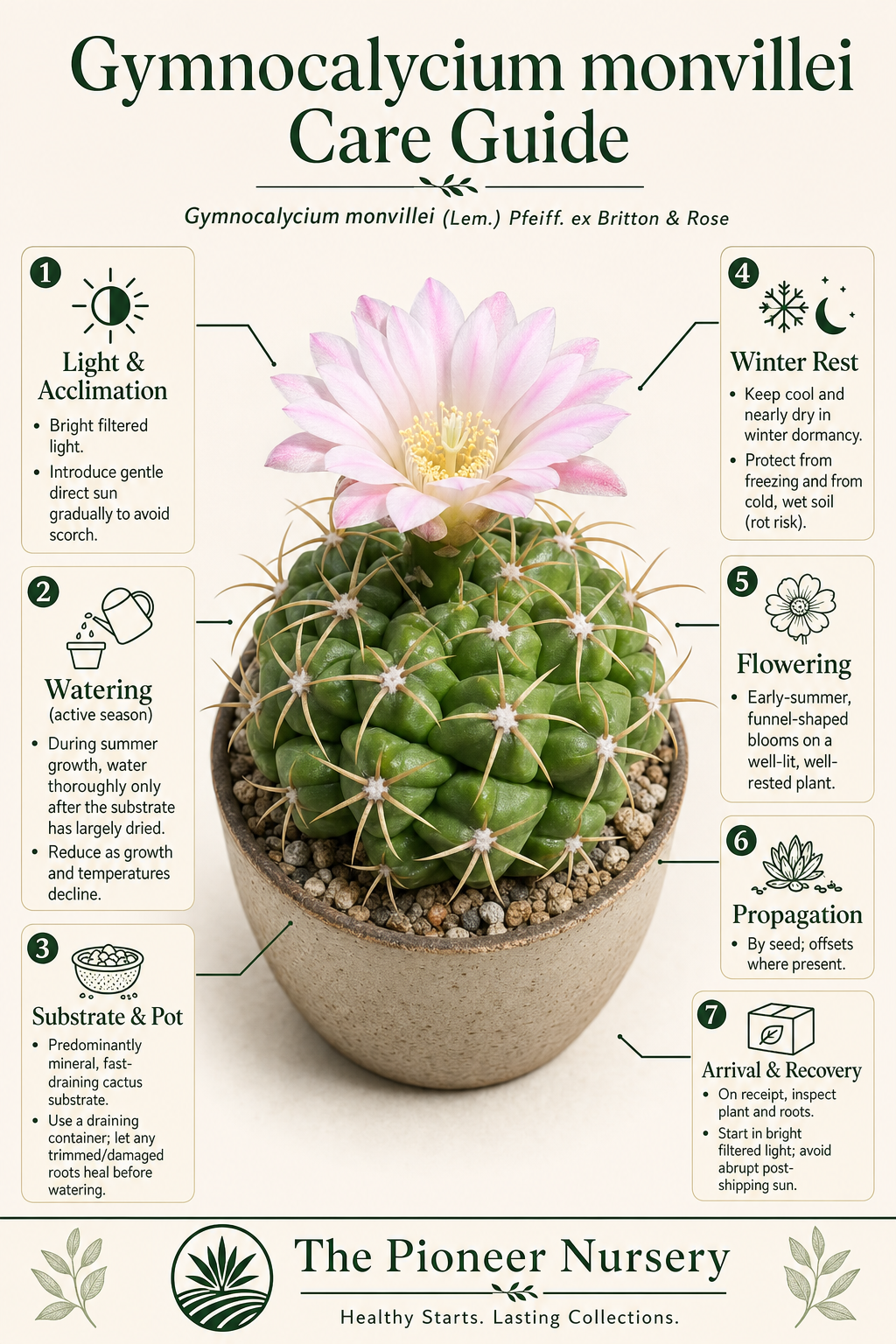
Gymnocalycium monvillei, commonly called a chin cactus, is a cactus from northwestern Argentina and a summer-growing member of the Gymnocalycium genus. It performs best in bright filtered light or gentle direct sun, a very porous substrate, and thorough watering only after the soil has largely dried. The most important seasonal rule is to keep it nearly dry during cool winter dormancy, because cold, wet roots are especially vulnerable to rot.
Quick Care Summary
- Bright filtered light or gentle direct sun after gradual acclimation.
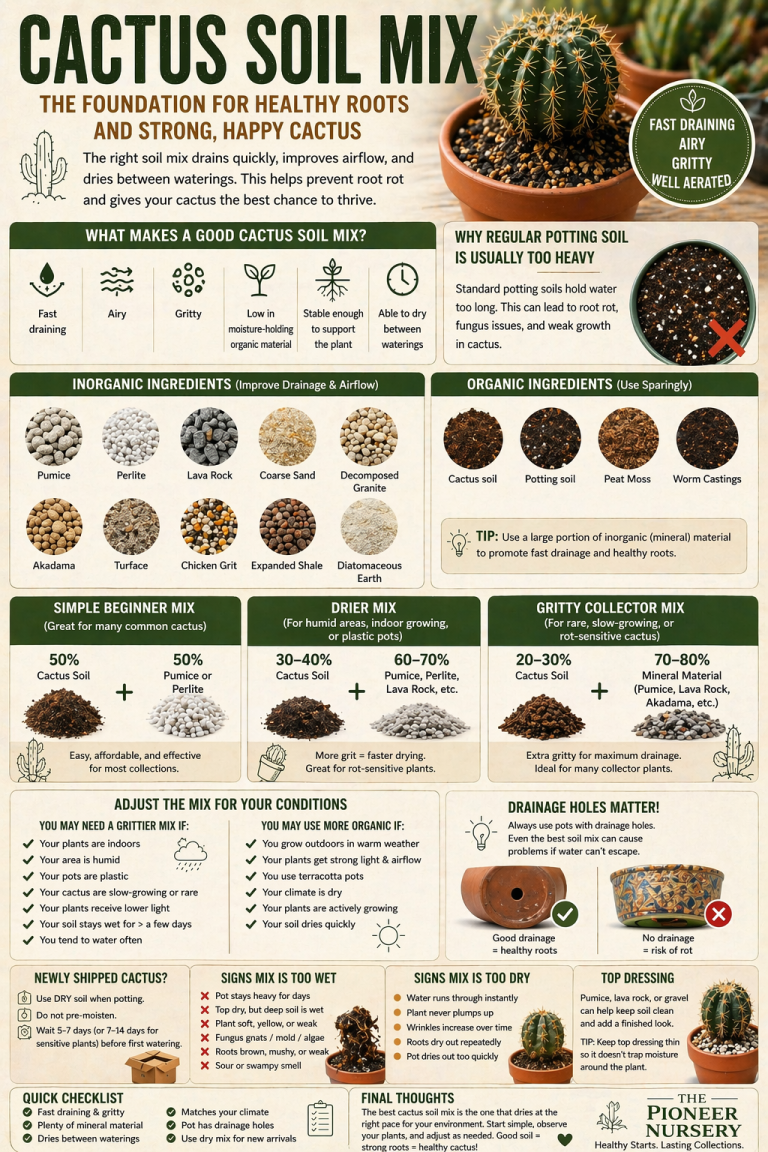
- Use a predominantly mineral, fast-draining cactus substrate.
- Water thoroughly during summer growth after the substrate has largely dried.
- Reduce watering as growth and temperatures decline.
- Keep nearly dry during cool winter dormancy.
- Avoid cold, wet soil, which substantially increases rot risk.
- Repot in a draining container and allow damaged roots to heal before watering.
- Protect from freezing conditions and abrupt post-shipping sun exposure.
About Gymnocalycium monvillei
Gymnocalycium monvillei is an accepted botanical species. It is also associated in references with names including Echinocactus monvillei, Gymnocalycium multiflorum, and Gymnocalycium grandiflorum; these differing synonym treatments do not obscure the species identity used in this guide. Plants may show variation among forms or localities, but no cultivar or hybrid is implied by the species name alone.
Light
Provide bright light with some direct sun after gradual acclimation. Light shade or filtered high light is a cautious default, especially in hot climates or behind greenhouse glass. Do not move a shaded or recently shipped plant suddenly into intense, unfiltered sunlight, as this can cause sunburn. Insufficient light may produce weak, elongated growth.
Watering
During active summer growth, water thoroughly once the substrate has largely dried, and let excess water drain completely. Adjust watering to the plant’s growth, light, temperature, and substrate rather than following a fixed calendar. Reduce watering as temperatures and growth decline, keeping the plant nearly dry during cool winter dormancy. Constantly wet roots, particularly in cold conditions, create a substantial rot risk.
Soil and substrate
Use a very porous, rapidly draining cactus mix with strong root aeration. A predominantly mineral blend based on pumice, coarse grit, perlite, or similar aggregate, with a modest organic component, is appropriate. A slightly acidic substrate may benefit Gymnocalycium, but the supplied research does not establish a precise pH requirement for this species.
Potting and roots
Choose a container with a drainage hole and avoid oversized pots that stay wet for extended periods. Repot during active growth when possible. No specialized enlarged taproot requirement was verified, so normal globose-cactus potting practices are appropriate while allowing adequate room for the roots. After repotting or substantial root disturbance, keep the plant dry long enough for damaged roots to heal before cautiously resuming watering.
Temperature and winter rest
Warm growing conditions are beneficial during the active season. Protect Gymnocalycium monvillei from prolonged cold and freezing temperatures, especially when the soil is wet. A specialist reference reports tolerance to approximately -5 °C when completely dry, but this should be regarded as a controlled lower limit, not a routine outdoor recommendation. In winter, provide bright light, good ventilation, and a cool-to-mild, nearly dry rest.
Fertilizer
Feed only during active spring and summer growth. Use a dilute cactus fertilizer or balanced fertilizer at low strength; specialist cultivation guidance specifically recommends a relatively potassium-rich fertilizer during summer. Do not fertilize a dry, dormant, recently repotted, or stressed plant.
Flowering
Funnel-shaped flowers generally appear in early summer. Strong light, warmth, and active growth support flowering. Some cultivated forms associated with the monvillei group may be dioecious, meaning an individual plant may not produce viable seed by itself or may require a compatible pollen source.
Propagation
Propagation is principally by seed, with offsets also usable when a plant produces them. Research on G. monvillei seed germination examined temperatures from 25–32 °C, water availability, and light conditions. Cactus seed can be very small, so seedlings need careful early monitoring and protection from both drying out and excessive sun.
Shipping and arrival care
Receive and ship this cactus as dry as practical, with protection from freezing temperatures and prolonged cold transit. After arrival, inspect it for damage or rot and place it in bright but initially filtered light. Gradually acclimate it to stronger sun. If it arrived bare-root or with substantial root disturbance, allow damaged roots to dry and heal before watering.
Common Problems
- Root or stem rot: Usually associated with poor drainage or wet soil during cool conditions.
- Sunburn: Can follow abrupt exposure to intense direct light, particularly after shipping or greenhouse shade.
- Etiolation: Weak, elongated growth indicates insufficient light.
- Cold injury: Freezing conditions are especially risky when the plant is wet.
- Poor seed set: Some plants may need compatible pollen because of possible sexual-system variation.
- Pests: Mealybugs, scale, and other common cactus pests may occur, especially in sheltered greenhouse collections.
Frequently Asked Questions
How often should I water Gymnocalycium monvillei?
Do not use a fixed schedule. During active summer growth, water thoroughly after the substrate has largely dried, then allow excess water to drain. Water much less as growth and temperatures decline, keeping the plant nearly dry during cool winter dormancy.
Can Gymnocalycium monvillei take full sun?
It can receive some direct sun after gradual acclimation, but bright filtered light or light shade is a cautious default, especially in hot climates. Avoid sudden exposure to intense unfiltered sunlight.
Does it need a special deep pot for a taproot?
No specialized enlarged taproot requirement was verified. Use a container with drainage and normal globose-cactus potting practices, while providing adequate root space and avoiding oversized pots.
When does Gymnocalycium monvillei flower?
Flowers generally appear in early summer. Strong light, warmth, and active growth support flowering.
How should I care for it after shipping?
Inspect it for damage or rot, begin with bright filtered light, and acclimate gradually to stronger sun. If it arrived bare-root or with substantial root disturbance, let damaged roots dry and heal before watering.
Can I grow it from seed?
Yes. Seed is the principal propagation method, and offsets may also be used when produced. Research has examined germination under temperatures of 25–32 °C and different water and light conditions.
Gymnocalycium monvillei is best managed by responding to its growth and conditions rather than following a calendar. Give it porous soil, bright but acclimated light, careful summer watering, and a cool, dry winter rest, with extra caution after shipping or root disturbance.