Gymnocalycium ochoterenae Care Guide
Learn how to grow Gymnocalycium ochoterenae with bright acclimated light, careful active-season watering, porous soil, and a cool, dry winter rest.
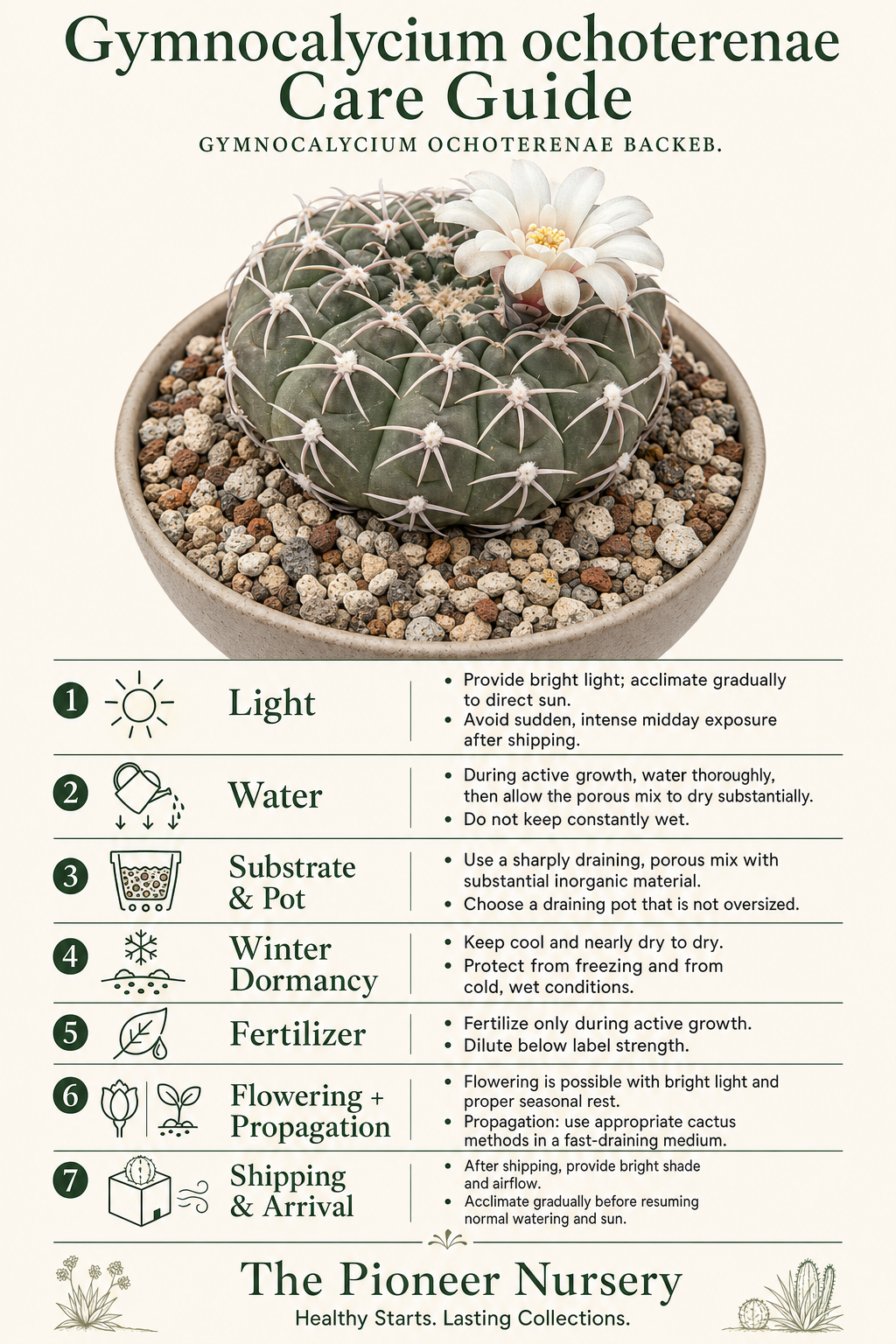
Gymnocalycium ochoterenae Backeb., commonly included among the chin cacti, is a terrestrial globular cactus native to Argentina, including San Luis and Córdoba. It grows best with bright light, sharply draining soil, thorough watering during active growth, and a substantially drier winter rest. The accepted species treatment used here follows Plants of the World Online; related names have received different treatment in specialist cactus literature.
Quick Care Summary
- Provide bright light with gradual acclimation to direct sun.
- Water thoroughly during active growth, then allow the porous mix to dry substantially.
- Keep the plant nearly dry or dry during cool winter dormancy.
- Use a sharply draining substrate with substantial inorganic material.
- Choose a draining pot that is not oversized.
- Protect from freezing and cold, wet conditions.
- Fertilize only during active growth, and dilute below label strength.
About Gymnocalycium ochoterenae
This species is a succulent, terrestrial Gymnocalycium. Its care is especially shaped by two priorities: maintaining airy, fast-draining root conditions and avoiding frequent moisture during cool winter conditions. Species limits and related names, including Gymnocalycium vatteri and Gymnocalycium bodenbenderianum, have been treated differently by some specialists.
Light
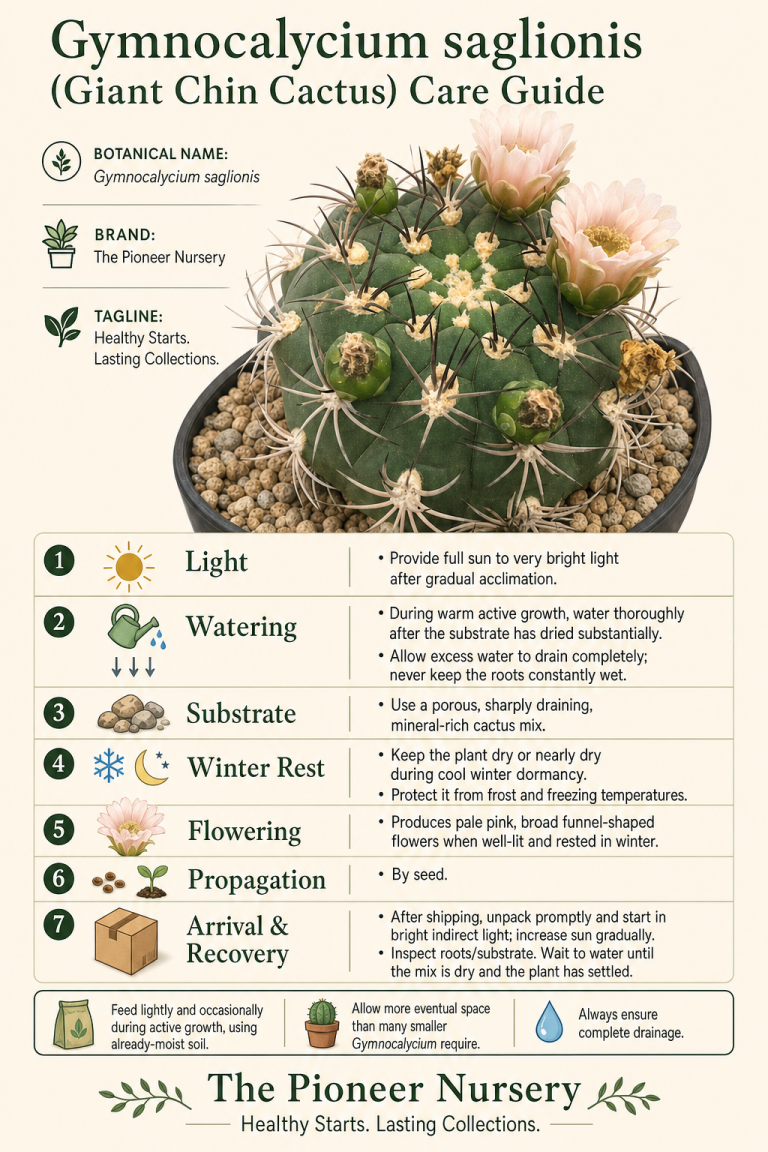
Provide bright light with some direct sun. Acclimate gradually after shipping, indoor cultivation, or winter protection because abrupt intense sun can cause sunburn. Bright light is important for compact growth and flowering, while insufficient light can lead to etiolation and reduced flowering.
Watering
During active growth, water thoroughly and then allow the substrate to dry substantially before watering again. Do not keep the root zone constantly wet. Reduce watering markedly in cool winter conditions and keep the plant nearly dry or dry during dormancy, especially below approximately 55°F (13°C). Resume watering gradually as temperatures and growth increase.
Soil and substrate
Use a sharply draining, porous cactus mix containing substantial inorganic material such as pumice, perlite, or coarse mineral aggregate. A modest organic component may be included, but the finished mix should retain air and dry within a reasonable interval after watering.
Potting and roots
Choose a container with an effective drainage hole and avoid an oversized pot. Repot during active growth when possible, handling the roots carefully and removing old, compacted, or poorly draining substrate. After significant root disturbance, allow damaged roots and the new substrate interface to dry before cautiously resuming irrigation.
Temperature and winter dormancy
Warm conditions suit active growth. A cool, dry winter rest is recommended for established plants, particularly indoors or in a greenhouse with reduced light. Protect the cactus from freezing and from cold, wet conditions, which greatly increase rot risk. Avoid stimulating weak winter growth with frequent water or fertilizer.
Fertilizer
Feed only during active growth, using a balanced fertilizer diluted below label strength at intervals suited to the growing environment. Do not fertilize a dry, dormant, recently shipped, or recently repotted plant.
Flowering
Gymnocalycium species commonly flower during the growing season and may flower while still relatively small. Bright light, adequate warmth during growth, and a preceding cool, dry rest generally support flowering. Species-specific flowering performance for Gymnocalycium ochoterenae was not independently documented in the available cultivation sources.
Propagation
Propagation is primarily by seed. Gymnocalycium seed may be very small, and seedlings can grow slowly during their early years. Offsets may be used if the plant produces them, although this behavior was not verified specifically for this species. Allow separated offsets or damaged cut surfaces to callus before potting.
Shipping and arrival care
Inspect the plant after arrival and protect the stem and growing point from compression. Provide bright but filtered light initially, then acclimate gradually to stronger sun. Do not water immediately if the plant arrived bare-root, has damaged roots, or has undergone substantial repotting; wait until wounds have dried and the plant has stabilized.
Common Problems
- Root or basal rot: usually associated with prolonged moisture, poor drainage, or cool, wet conditions.
- Sunburn: can follow abrupt exposure to intense direct sunlight; acclimate gradually.
- Etiolation or reduced flowering: may indicate inadequate light.
- Sap-feeding pests: mealybugs, scale, and other sap-feeding pests may be more troublesome indoors during winter.
- Poor flowering or bud abortion: can occur when conditions fluctuate severely or plants remain too cool and wet.
Frequently Asked Questions
How often should I water Gymnocalycium ochoterenae?
Water thoroughly during active growth, then wait for the substrate to dry substantially before watering again. Frequency depends on light, temperature, substrate, and root condition rather than a fixed calendar. Reduce watering markedly during cool winter dormancy.
Can Gymnocalycium ochoterenae take direct sun?
Yes, bright light with some direct sun is appropriate, but acclimate gradually after shipping, indoor growth, or winter protection to reduce the risk of sunburn.
Does this cactus need a winter rest?
Established plants benefit from a cool, dry winter rest. Keep it nearly dry or dry in cool conditions, especially below approximately 55°F (13°C), and avoid winter fertilizer.
What soil should I use?
Use a porous, sharply draining cactus substrate with substantial pumice, perlite, or other coarse mineral material. Avoid mixes that remain constantly wet or compacted.
How can I encourage flowering?
Provide adequate bright light and warmth during active growth, followed by a cool, dry rest. Flowering performance specifically for this species has not been independently documented in the available cultivation research.
Should I water immediately after shipping or repotting?
Not necessarily. If the plant is bare-root, has damaged roots, or has undergone major repotting, allow wounds and the new substrate interface to dry before cautious watering.
Gymnocalycium ochoterenae is best approached as a bright-growing cactus that needs excellent drainage and a genuinely dry cool season. Let the plant's light, temperature, substrate, and root condition—not a fixed watering calendar—determine when care should resume.