Mammillaria magnimamma Care Guide
Learn how to grow Mammillaria magnimamma, a clumping Mexican pincushion cactus that prefers strong light, sharply drained soil, careful watering, and a cool, dry winter rest.
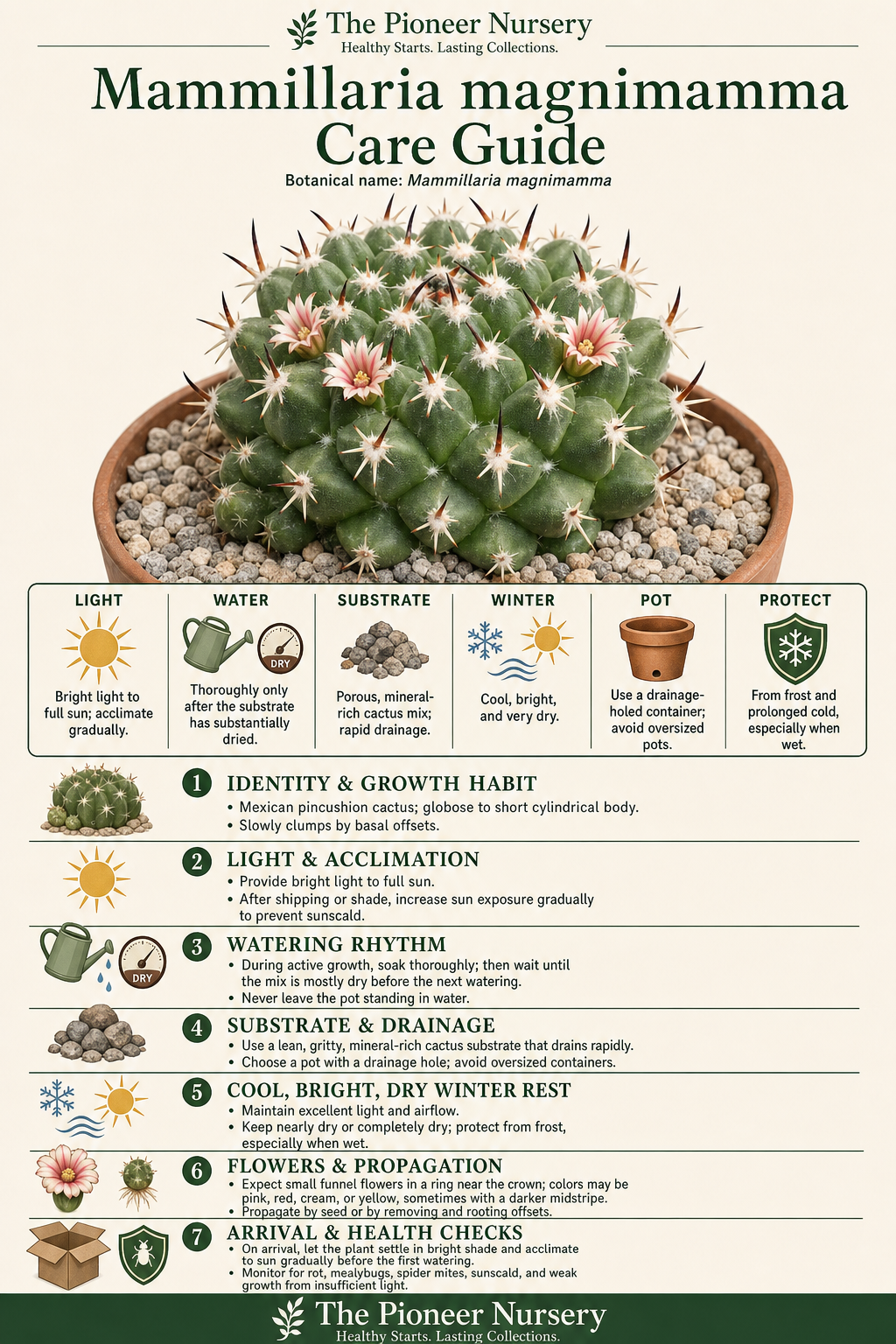
Mammillaria magnimamma, commonly called Mexican pincushion cactus, is a typically globose to short cylindrical cactus that may gradually form clumps. Its main care priorities are strong light, rapid drainage, and allowing the roots to dry substantially between waterings. During cool, low-light winter conditions, growth slows and the plant should remain nearly dry. With suitable care, it can produce a ring of small funnel-shaped flowers near the crown.
Quick Care Summary
- Provide bright light to full sun, with gradual acclimation after shipping or shade.
- Use a porous, mineral-rich cactus substrate that drains rapidly.
- Water thoroughly during active growth only after the substrate has substantially dried.
- Keep the plant nearly dry or completely dry during a cool winter rest.
- Protect from frost and prolonged cold, especially when wet.
- Use a drainage-holed pot and avoid oversized containers.
- Watch for rot, mealybugs, spider mites, sunscald, and weak growth from insufficient light.
About Mammillaria magnimamma
Mammillaria magnimamma is an accepted species with a clumping growth habit. Mature plants may produce basal offsets, and flowers appear in a ring near the crown. Good airflow, strong light, and a porous substrate help maintain compact growth and reduce the risk of prolonged root wetness.
Light
Provide bright light to full sun during active growth. Acclimate gradually after shipping or after moving the plant from lower-light conditions. In very hot climates, light afternoon shade can help reduce sunscald while maintaining compact growth. Insufficient light may cause elongated, weak growth.
Watering
Water thoroughly during active growth only after the substrate has substantially dried. Let excess water drain completely, and never leave the pot standing in water. As growth slows, reduce watering. During a cool winter rest, keep the plant nearly dry or completely dry according to temperature, humidity, and root condition. Constantly wet roots create a significant rot risk, especially in cold conditions.
Soil and substrate
Use a very well-drained, porous cactus substrate with substantial mineral content, such as pumice, grit, coarse sand, or perlite. Avoid heavy mixes that retain moisture for long periods. Rapid drainage is especially important when temperatures are cool or light levels are low.
Potting and roots
Choose a container with drainage holes and avoid an oversized pot, which can hold moisture around the roots longer than necessary. Repot approximately every 2–3 years or when the substrate has degraded. Mammillaria magnimamma does not require specialized deep-pot treatment for an enlarged taproot, but its roots still need good drainage. If roots are damaged or disturbed, allow them to dry and heal before resuming careful watering.
Temperature and winter rest
Warm conditions suit the plant during active growth. Protect it from frost and prolonged cold, especially when the substrate is wet. A cool, bright, dry winter rest around 7–13 °C (45–55 °F) may help maintain dormancy and support flowering, provided the plant remains dry. Growth generally slows or stops in cool, low-light winter conditions.
Fertilizer
During active spring and summer growth, apply a dilute, low-nitrogen cactus fertilizer occasionally when the plant is adequately watered. Do not fertilize during dormancy or immediately after repotting.
Flowering
Small funnel-shaped flowers are produced in a ring near the crown, primarily in spring and sometimes again later in the season. Flower color is variable and may include pink, red, cream, or yellow tones, often with a darker central stripe. Strong light and a suitable cool, dry winter rest may support flowering.
Propagation
Mammillaria magnimamma can be propagated from seed or offsets. Mature clumps may produce basal offsets. Detach an offset with a clean tool, allow the wound to callus fully, and then root it in a dry, sharply drained medium. The species is also documented as reproducing sexually from seed and clonally through offsets.
Common problems
Root or stem rot is associated with poor drainage, low light, or watering during cold conditions. Mealybugs may occur on the plant or among the roots beneath the substrate. Spider mites are more likely in hot, dry, poorly ventilated conditions. Sudden exposure to strong direct sun can cause sunscald, while insufficient light can cause etiolation and weak growth.
Shipping and arrival care
Receive and handle the plant as dry as practical, protecting the stem and spines from crushing. After arrival, provide bright but filtered light at first and gradually acclimate it to direct sun. Do not water immediately if the roots were disturbed, the plant arrived cold, or the substrate is still damp. Resume watering only after the plant has stabilized and conditions are warm and ventilated.
Frequently Asked Questions
How often should I water Mammillaria magnimamma?
Do not use a fixed calendar. During active growth, water thoroughly after the substrate has substantially dried, then let excess water drain completely. Reduce watering as growth slows and keep the plant nearly dry during a cool winter rest.
Can Mammillaria magnimamma grow in full sun?
Yes. Bright light to full sun suits the plant during active growth, but acclimate it gradually after shipping or lower-light conditions. Light afternoon shade may help in very hot climates.
Does it need a deep pot for a taproot?
No specialized deep-pot treatment for an enlarged taproot is required. Use a drainage-holed pot that is not oversized and provide a sharply drained substrate.
When does Mammillaria magnimamma flower?
It primarily flowers in spring and may flower again later in the season. Small flowers form in a ring near the crown, with colors that may include pink, red, cream, or yellow.
How can I propagate it?
Propagate by seed or offsets. Allow detached offsets to callus fully before placing them in a dry, sharply drained medium.
Should I water it immediately after shipping?
Not necessarily. If roots were disturbed, the plant arrived cold, or the substrate is damp, wait until it has stabilized in warm, ventilated conditions before watering.
Mammillaria magnimamma is best suited to a bright position, a mineral, fast-draining substrate, and a watering routine guided by drying and seasonal growth. Keep it notably drier during cool winter conditions, acclimate it carefully to strong sun, and avoid oversized pots that stay wet too long.