Turbinicarpus minimus Care Guide
Turbinicarpus minimus, also treated as Kadenicarpus pseudomacrochele subsp. minimus, is a very small, slow-growing cactus with a deep napiform root. Success depends on strong light, mineral soil, careful watering, and a dry winter rest.
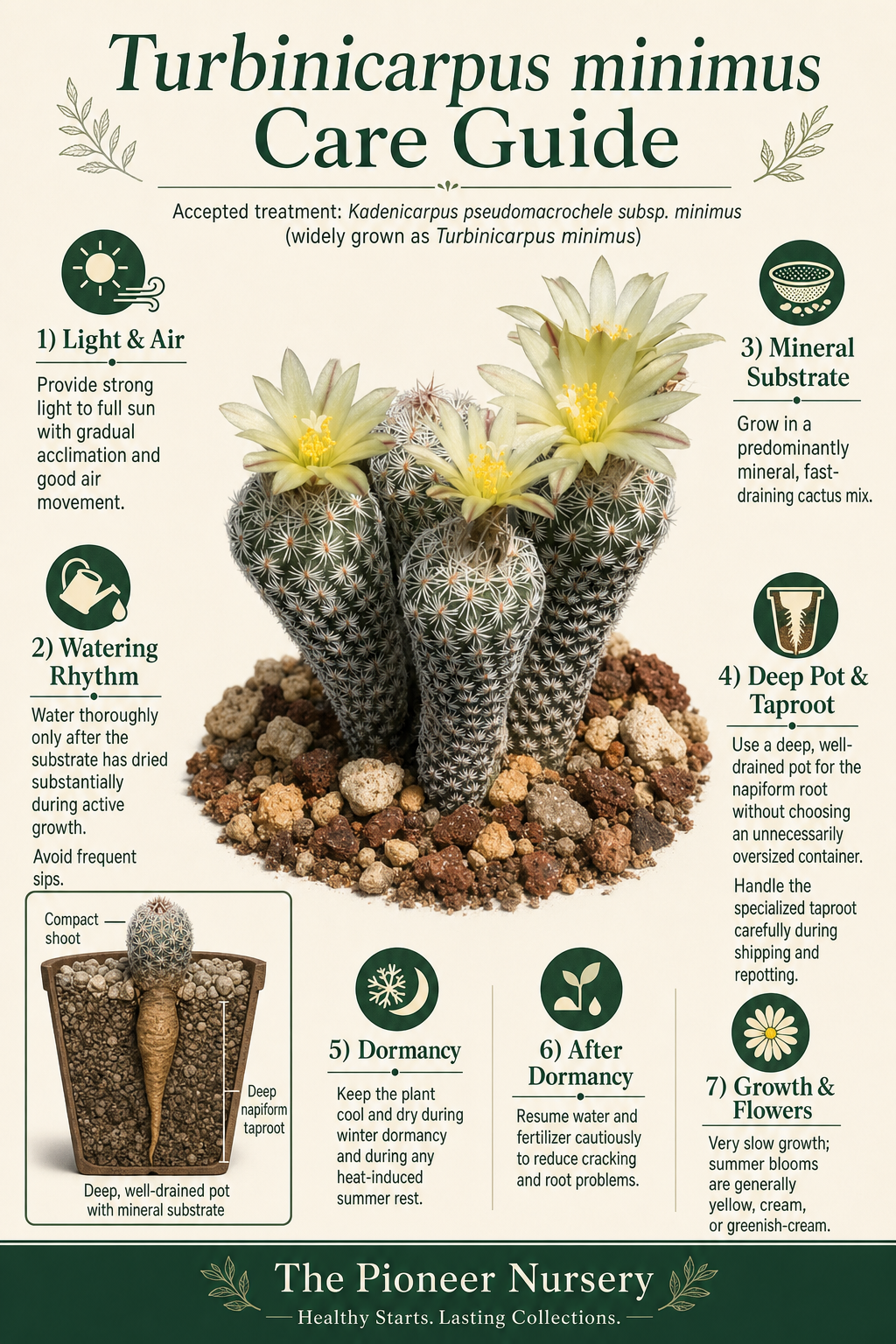
Turbinicarpus minimus is a very small, slow-growing cactus known in horticulture as Biznaugita. Its deep, specialized napiform root is the main care consideration: use a deep but not oversized pot, provide a highly mineral substrate, and avoid keeping the root system wet. The plant benefits from strong light, good air movement, cautious watering during active growth, and a cool, dry winter rest. Current taxonomic treatment places it as Kadenicarpus pseudomacrochele subsp. minimus, while Turbinicarpus minimus remains useful legacy or nursery usage for this plant.
Quick Care Summary
- Provide strong light to full sun with gradual acclimation and good air movement.
- Use a deep, well-drained pot for the napiform root without choosing an unnecessarily oversized container.
- Grow it in a predominantly mineral, fast-draining cactus substrate.
- Water thoroughly only after the substrate has dried substantially during active growth.
- Keep the plant cool and dry during winter dormancy and during any heat-induced summer rest.
- Water and fertilize cautiously after dormancy to reduce cracking and root problems.
- Handle the specialized taproot carefully during shipping and repotting.
About the plant
This is a very small cactus with a small, elongated body and a deep tuberous or napiform taproot. Growth is very slow, although plants may flower while still relatively small. Older cactus literature and horticulture often use Turbinicarpus for this group, while Plants of the World Online accepts Kadenicarpus pseudomacrochele subsp. minimus. These names refer to the same underlying plant identity for cultivation purposes.
Light and ventilation
Provide strong light to full sun with good air movement. Protect the plant from the hottest midday exposure when necessary, especially after shipping or a move from shade. Acclimate gradually to stronger sun to prevent sunburn. Insufficient light, particularly when combined with frequent watering, can cause elongated growth and weaker spine development.
Watering
Water during active growth only after the substrate has dried substantially. Once growth is established, water thoroughly and allow excess moisture to drain rapidly. Avoid repeated light watering and never keep the root system constantly wet. Begin the growing season cautiously, and reduce or stop watering during winter dormancy or a heat-induced summer rest. Sudden heavy watering after dormancy can contribute to body cracking, especially if combined with fertilizer.
Soil and substrate
Use a very porous, fast-draining, predominantly mineral cactus substrate with excellent aeration and limited organic matter. The substrate should dry reliably between waterings and must not hold moisture around the deep taproot. Good ventilation is especially important in humid climates or enclosed greenhouses.
Potting and roots
The deep napiform root needs a pot deep enough to fit without bending or crowding, but an oversized container can hold excess moisture. Repot only when needed and handle the root carefully. After significant root disturbance, keep the plant dry until damaged tissue has callused. Loss of root function following rough handling is a serious risk for this plant.
Temperature and seasonal growth
Provide warm growing conditions with strong ventilation. Protect the plant from frost and from cold, wet conditions. It normally rests during winter, approximately November to mid-March in a temperate Northern Hemisphere collection. Maintain a cool, dry rest rather than combining low temperatures with moisture. Specialist cultivation guidance recommends keeping it dry when night temperatures remain below approximately 10 °C. A short summer rest may occur during extreme heat; resume watering cautiously when active growth returns.
Fertilizer
Feed sparingly during active growth with a dilute, low-nitrogen cactus fertilizer. Apply fertilizer only when the plant is already hydrated and actively growing. Avoid heavy feeding or strong fertilizer at the beginning of the season, since rapid uptake can contribute to cracking and root problems.
Flowering
Flowers are diurnal and generally yellow, cream, or greenish cream, reaching approximately 2 cm across. Flowering typically occurs in summer. Despite its slow growth, the plant may flower while still relatively small.
Propagation
Propagation is primarily by seed. This taxon is slow growing and rarely produces plantlets. Grafting is possible for propagation or accelerated establishment, but it is not required for normal cultivation.
Shipping and arrival care
Because the deep napiform root is vulnerable to damage and rot, the plant should be shipped and received dry whenever possible, with protection from crushing and prolonged damp packing. After arrival, inspect the plant and root for wounds or rot. If it has experienced major bare-root handling or root damage, pot it into dry mineral substrate and allow damaged tissue to callus before watering. Acclimate gradually to stronger light rather than placing it immediately in intense sun.
Common Problems
- Root rot: Usually associated with wet substrate, poor aeration, or cold conditions combined with moisture.
- Body cracking: Sudden heavy watering or fertilizer after dormancy can cause cracking.
- Weak, elongated growth: Insufficient light or overly frequent watering can produce stretched growth and weaker spines.
- Sunburn: Abrupt exposure to strong sun can damage the body; acclimate gradually.
- Root damage: Rough repotting or shipping can impair the specialized taproot and reduce root function.
- Pests: Mealybugs or scale may occur, particularly in sheltered greenhouse collections.
Frequently Asked Questions
How often should Turbinicarpus minimus be watered?
Do not follow a fixed calendar. Water during active growth only after the substrate has dried substantially, then allow rapid drainage. Reduce or stop watering during winter dormancy, summer heat rest, and cold conditions.
Does Turbinicarpus minimus need a deep pot?
Yes. Its deep napiform taproot needs enough room to fit without bending or crowding. Choose a deep pot, but avoid an unnecessarily oversized container that may retain moisture.
Can this cactus grow in full sun?
It can receive strong light to full sun when acclimated gradually. Protect it from the hottest midday exposure when necessary, especially after shipping or growing in shade.
When does it flower?
Flowering typically occurs in summer. Flowers are generally yellow, cream, or greenish cream, and plants may flower while still relatively small.
How should I care for it after shipping?
Inspect the plant and root for damage, pot it into dry mineral substrate, and avoid immediate watering after major bare-root handling or repotting. Allow root damage to callus and gradually acclimate the plant to stronger light.
Is Turbinicarpus minimus the same as Kadenicarpus pseudomacrochele subsp. minimus?
The submitted name is established legacy or nursery usage for this taxon. Plants of the World Online currently accepts Kadenicarpus pseudomacrochele subsp. minimus, while older and specialist cactus references may retain Turbinicarpus. The differing generic treatments refer to the same cultivated plant identity here.
Turbinicarpus minimus rewards patience and careful moisture management. Give its deep root room, keep the substrate mineral and quick to dry, provide strong acclimated light, and maintain a dry winter rest. With those conditions and gentle handling, this slow-growing collector cactus can remain compact and flower while still small.