Astrophytum asterias — Monstrose Care Guide
Learn how to grow Astrophytum asterias in its monstrose horticultural form, with guidance on light, dry-down, porous soil, dormancy, flowering, and rot prevention.
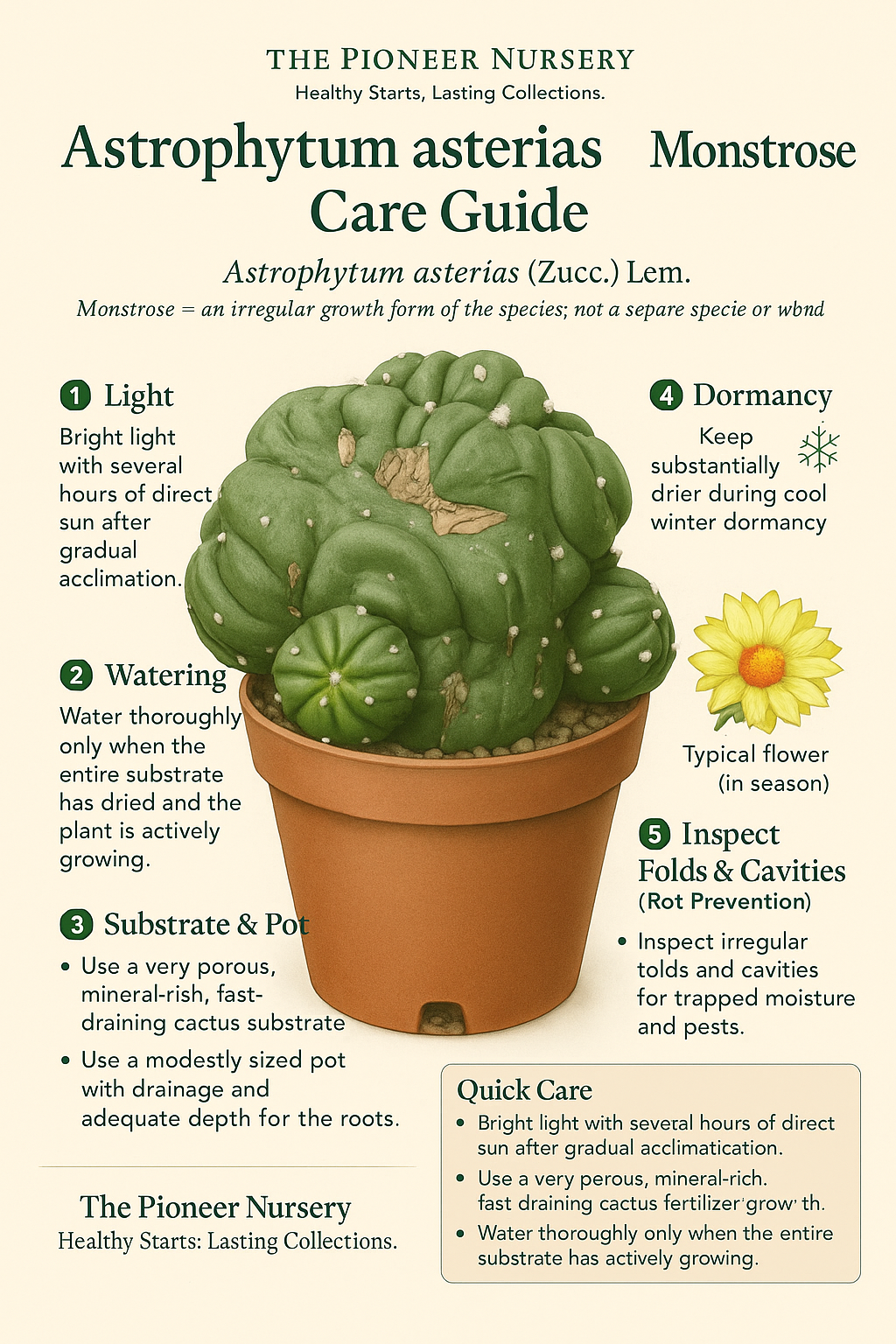
Astrophytum asterias — Monstrose is the accepted species Astrophytum asterias growing in an irregular monstrose form. “Monstrose” describes unusual development rather than a separate species, formally established cultivar, or confirmed hybrid, so individual plants may vary in rib formation, symmetry, offsets, and growth pattern. The most important care priorities are bright but gradually acclimated light, very porous soil, complete drying between waterings, and extra attention to moisture trapped in irregular folds or cavities.
Quick Care Summary
- Bright light with several hours of direct sun after gradual acclimation.
- Use a very porous, mineral-rich, fast-draining cactus substrate.
- Water thoroughly only when the entire substrate has dried and the plant is actively growing.
- Keep substantially drier during cool winter dormancy.
- Inspect irregular folds and cavities for trapped moisture and pests.
- Use a modestly sized pot with drainage and adequate depth for the roots.
- Feed sparingly with diluted, low-nitrogen cactus fertilizer during active growth.
About Astrophytum asterias — Monstrose
Astrophytum asterias is also known as star cactus, sand dollar cactus, or sea urchin cactus. The monstrose form develops an irregular plant body that can create shaded, poorly ventilated pockets. Care is based primarily on verified Astrophytum asterias requirements, with additional caution around inspection, airflow, and trapped moisture. The monstrose designation does not establish hybrid parentage or a separate botanical rank.
Light
Provide bright light with several hours of direct sun once the plant is acclimated. After shipping, repotting, or a move from protected conditions, increase light gradually to reduce sunscald. In very intense climates, light afternoon shade can help prevent overheating while preserving compact growth.
Watering
Water thoroughly only after the substrate has dried completely, and only while the plant is actively growing. Let excess water drain fully. As temperatures cool, reduce watering and keep the plant nearly or completely dry during cool winter dormancy. Irregular monstrose tissue may hold moisture longer, so avoid leaving water in folds or growth cavities. Wet roots combined with cool conditions create a substantial rot risk.
Soil and Substrate
Use a very porous, fast-draining cactus mix with substantial mineral content and limited organic matter. The substrate should support active growth without remaining wet after irrigation. Avoid dense, peat-heavy, or poorly aerated mixes.
Potting and Roots
Choose a container with a drainage hole and only modestly more space than the root system requires. Astrophytum asterias can have somewhat tuberous roots, so provide adequate depth without using an unnecessarily large pot. Set the plant securely, keep the body above the substrate, and avoid trapping wet material around irregular growth points.
Temperature and Dormancy
Grow warm during active growth and protect the plant from frost. Growth generally slows in cool, short-day conditions. A cool winter rest can be used only when the plant is kept dry. During dormancy, provide strong light and good ventilation with little or no water. Resume watering cautiously when temperatures and light again support active growth.
Fertilizer
Feed sparingly during active growth with a diluted, low-nitrogen cactus fertilizer. Avoid repeated heavy feeding, which can encourage soft, swollen growth and reduce the compact form valued in Astrophytum.
Flowering
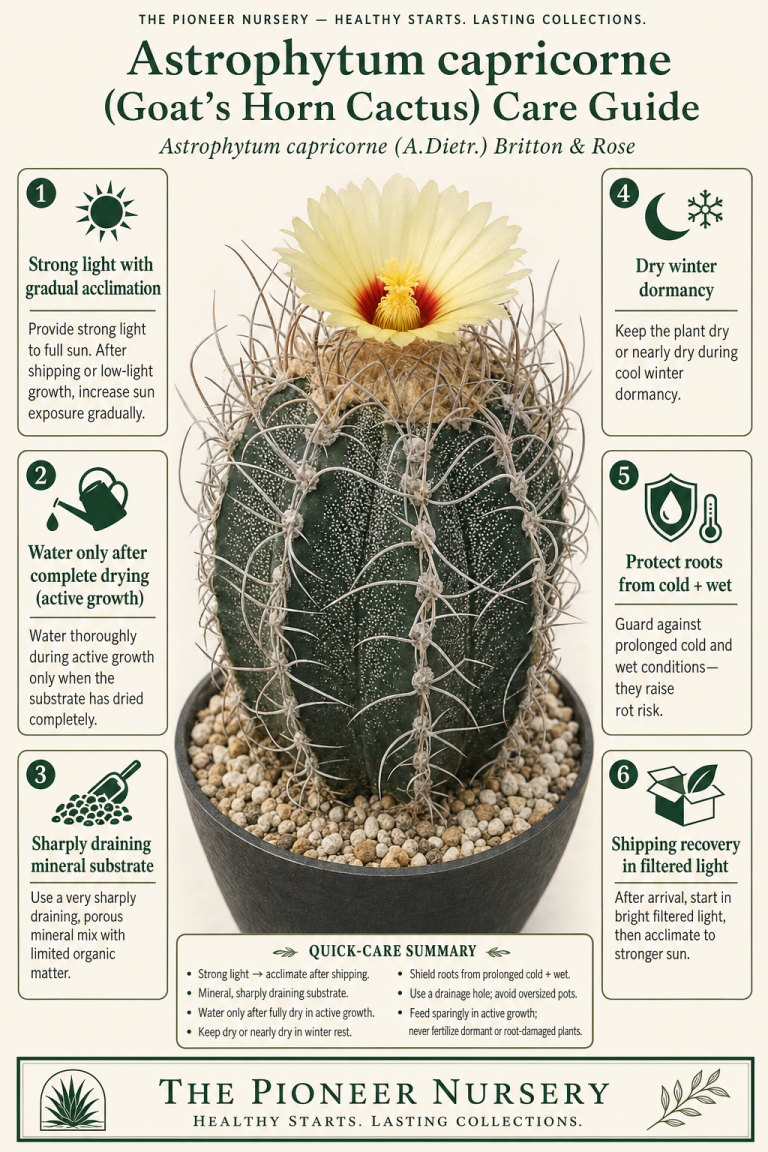
Mature Astrophytum asterias commonly produces yellow, funnel-shaped flowers, often with reddish centers, during the warm growing season. Flowering depends on maturity, strong light, seasonal growth, and a dry rest period. The monstrose form may flower irregularly or less predictably than a symmetrical plant.
Propagation
Seed propagation can produce Astrophytum asterias, but seedlings should not be expected to reproduce the monstrose form reliably. If an individual produces offsets or removable sections, vegetative propagation may preserve more of its unusual growth pattern, although success depends on the material. Grafting is also used in Astrophytum cultivation but is not required for healthy growth.
Common Problems
Inspect irregular folds, areoles, wool, and cavities regularly because they can conceal mealybugs or scale. Root and stem rot is associated with wet, poorly aerated substrate or watering during cool conditions. Sudden intense sun can cause sunburn. Insufficient light combined with excess moisture or fertilizer can produce soft, elongated growth. Rapid changes in hydration, temperature, or growth conditions may contribute to scarring or cracking.
Shipping and Arrival Care
Protect this plant from freezing temperatures, prolonged cold, and wet packing conditions. After arrival, inspect for mechanical damage and concealed moisture. Provide bright but initially filtered light, and allow disturbed or cut roots to dry and heal before watering. Gradually acclimate the plant to stronger sun after shipping. Recovery needs vary with root condition and the extent of handling.
Frequently Asked Questions
How often should I water Astrophytum asterias — Monstrose?
Do not follow a fixed calendar. Water thoroughly only after the substrate has dried completely and only during active growth. Reduce watering as temperatures cool and keep the plant nearly or completely dry during cool dormancy.
Does the monstrose form require different care from regular Astrophytum asterias?
Its basic care is the same, but irregular growth can create shaded pockets and retain moisture. Inspect the plant carefully and avoid allowing water to remain in folds or cavities.
Can this plant grow in full sun?
It can receive several hours of direct sun when acclimated. Increase exposure gradually after shipping, repotting, or a move from protected conditions; light afternoon shade may help in very intense climates.
Will seeds reliably produce another monstrose plant?
No. A monstrose phenotype should not be assumed to reproduce reliably from seed. Offsets or removable sections may preserve more of the unusual growth pattern, depending on the material.
Why is my plant not flowering?
Flowering depends on maturity, strong light, seasonal growth, and a dry rest period. The monstrose form may flower irregularly or less predictably than a symmetrical plant.
When can I water after shipping or root disturbance?
Inspect the roots and plant first. Allow disturbed or cut roots to dry and heal before watering, and wait until the plant is established in a well-draining substrate and active growing conditions are present.
Astrophytum asterias — Monstrose rewards careful observation. Keep the roots dry between waterings, provide strong light gradually, and inspect irregular growth closely so trapped moisture or pests are noticed early.