Coryphantha elephantidens ‘Titan’ Care Guide
Grow Coryphantha elephantidens ‘Titan’, or Elephant Tooth Cactus, with bright light, fast drainage, careful watering, and a dry winter rest.
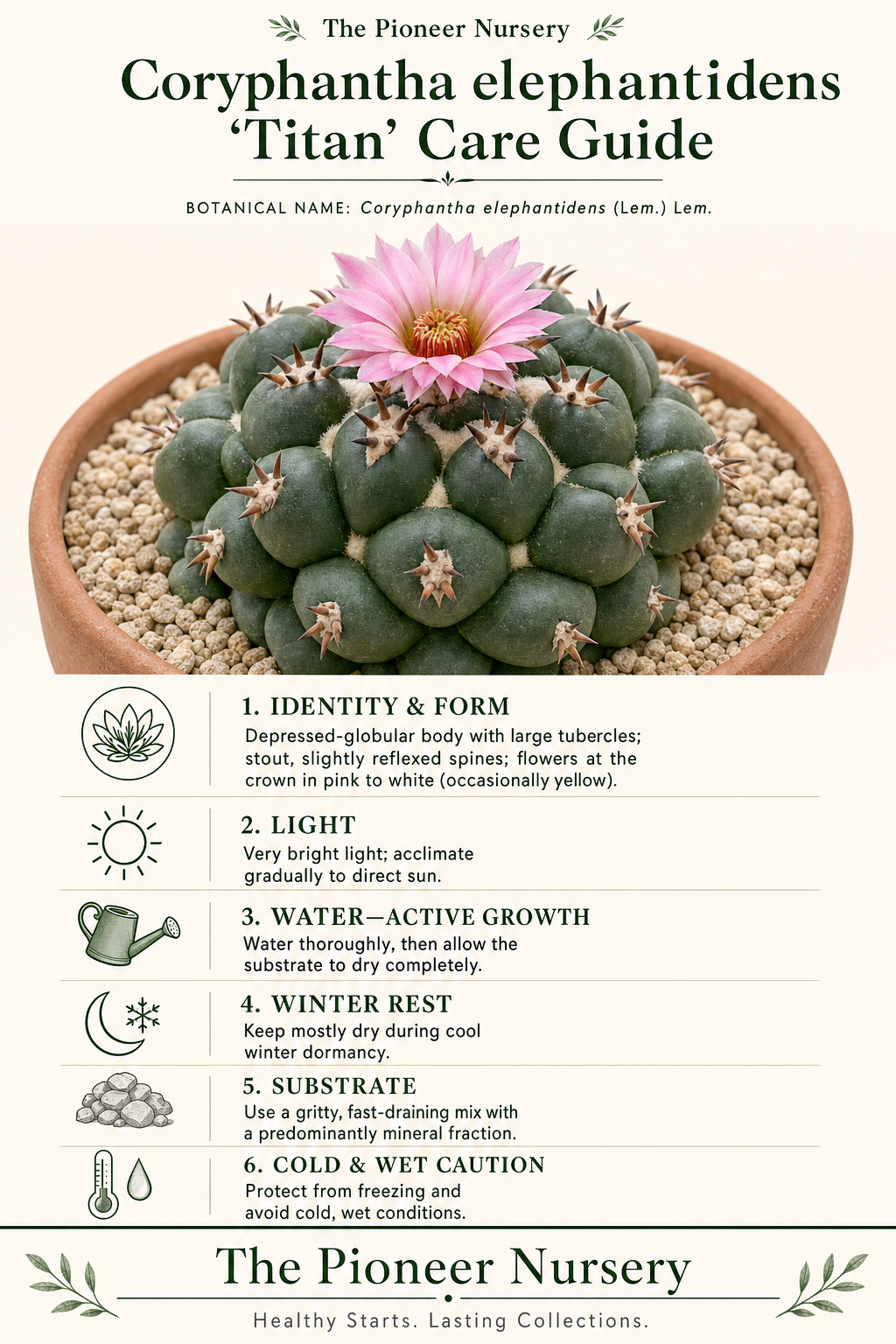
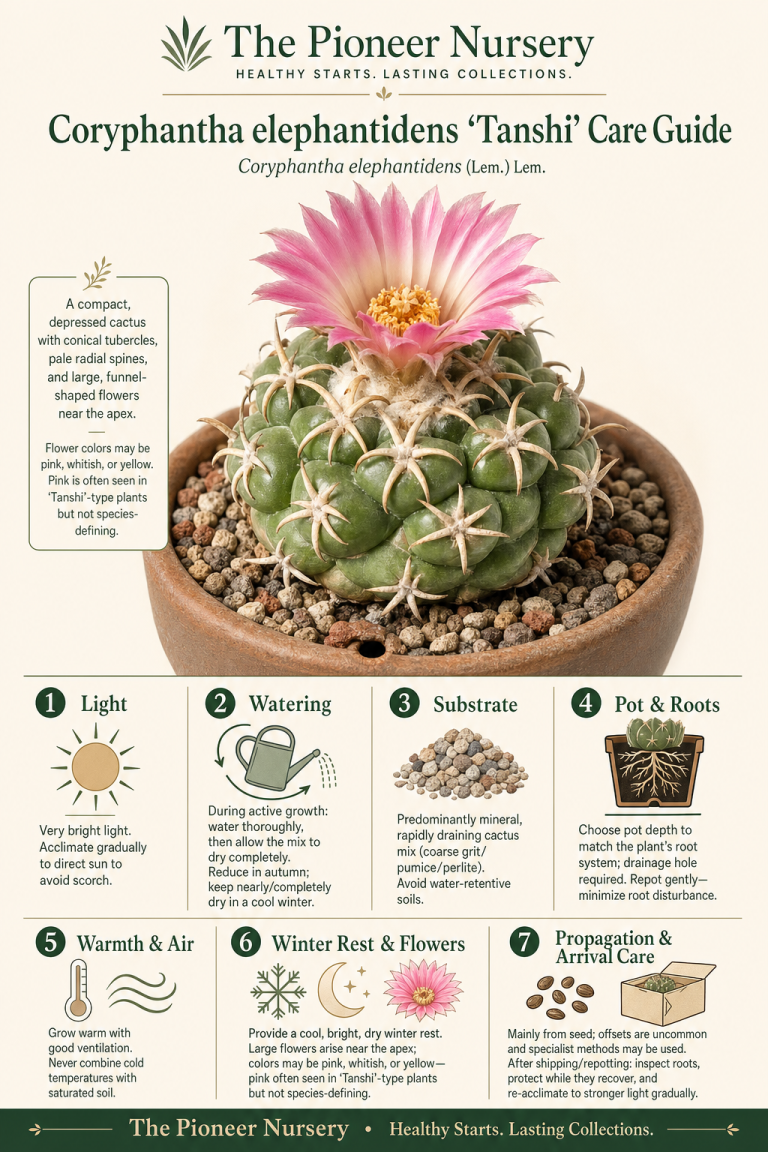
Coryphantha elephantidens ‘Titan’, also called Elephant’s Tooth or Elephant Tooth Cactus, is a large, depressed-globular Mexican cactus with conspicuously large tubercles and stout, somewhat reflexed spines. It may remain solitary or produce offsets. This guide uses species-level care because ‘Titan’ is a commercial or collector selection designation whose formal cultivar status and clone history are not independently verified.
Quick Care Summary
- Provide very bright light and acclimate gradually to direct sun.
- Water thoroughly during active growth, then let the substrate dry completely.
- Keep the plant mostly dry during cool winter dormancy.
- Use a gritty substrate with a predominantly mineral fraction.
- Protect it from freezing and cold, wet conditions.
About the Plant
Coryphantha elephantidens is an accepted species native to Mexico, occurring at approximately 1,100–2,000 m elevation. It is a warm-season grower with a pronounced dry winter rest. Its large tubercles and stout, somewhat reflexed spines give it a distinctive appearance.
Light
Provide very bright light with several hours of direct sun. Acclimate gradually after shipping or a move from shade to prevent sunburn. Light afternoon shade or filtered protection can help during extreme summer heat, especially in hot greenhouses. Inadequate light can cause elongated growth and reduced flowering.
Watering
Water thoroughly during active growth, then let the substrate dry completely. Reduce watering in autumn and keep the plant mostly dry during winter dormancy. Do not water while the plant is cold, airflow is poor, or the substrate remains damp. During prolonged extreme heat, keeping it somewhat drier may reduce root-rot risk. Heavy watering after prolonged drought or in unsuitable temperatures can cause splitting or tissue damage.
Soil and Substrate
Use a fast-draining, gritty cactus substrate with a predominantly mineral fraction, such as pumice, lava rock, coarse grit, or perlite. Limit organic material so the root zone dries promptly. Research supports well-drained mineral soil but does not establish a particular pH requirement or require excluding limestone.
Potting and Roots
Use a container with an unobstructed drainage hole and avoid a pot substantially larger than the root system. Repot at the beginning of active growth when necessary. Handle roots carefully. Allow damaged roots to dry and seal, then resume watering cautiously rather than immediately saturating freshly disturbed roots.
Temperature
Protect the plant from freezing and prolonged cold. Be especially careful when the substrate is wet. A short, dry exposure near approximately -3°C has been reported, but this is a lower limit—not a routine cultivation target. Keep the plant frost-free when its cold tolerance or root condition is uncertain.
Seasonal Growth and Dormancy
Treat this cactus as a warm-season grower with a pronounced dry winter. During winter, maintain strong light, good ventilation, and little to no irrigation while temperatures are low. Resume watering gradually as temperatures and daylight increase in spring.
Fertilizer
During active growth, apply diluted cactus or succulent fertilizer approximately monthly, preferably with modest nitrogen. Do not fertilize during winter dormancy or while the plant is stressed, recently repotted, or not actively growing.
Flowering
The species generally flowers from late summer into autumn. Flowers may be pink, rose, purple-pink, white, or occasionally yellow. Spring flowering has been reported commercially for ‘Titan’, but that selection-specific timing is not independently verified.
Propagation
Propagation is primarily from seed. Offsets may also be used when produced, although they may be uncommon in plants sold as ‘Titan’. Allow a removed offset’s cut surface to callus fully before placing it in a dry, porous rooting medium.
Common Problems
Root or basal rot: Wet, poorly aerated substrate and cold-season watering are common risks. Improve drainage and keep the plant drier in low temperatures.
Sunburn: Abrupt exposure to intense outdoor sun can damage the plant. Acclimate gradually.
Mealybugs, scale, and spider mites: Inspect the plant regularly.
Etiolated growth and reduced flowering: These usually indicate inadequate light.
Splitting or tissue damage: Avoid heavy watering after prolonged drought or during unsuitable temperatures.
Shipping and Arrival Care
Inspect the plant after arrival for rot or pests. Start it in bright, filtered light, then acclimate gradually to direct sun. Protect it from freezing temperatures. For bare-root plants or disturbed roots, use a dry, airy substrate and delay substantial watering until damaged roots have dried and sealed and the plant has been re-established.
Frequently Asked Questions
How can I tell when to water Coryphantha elephantidens ‘Titan’?
Water thoroughly during active growth only after the substrate has dried completely. In autumn, reduce watering; during cool winter dormancy, keep the plant mostly dry.
How should I acclimate it to full sun?
Start with bright, filtered light after shipping or shade exposure, then increase direct sun gradually. Light afternoon shade or filtered protection can help during extreme summer heat.
Why is the plant becoming elongated or failing to flower?
Inadequate light can cause etiolated growth and reduced flowering. Move it toward the guide’s very bright-light conditions gradually.
When does it flower?
Coryphantha elephantidens generally flowers from late summer into autumn. Flower colors may include pink, rose, purple-pink, white, or occasionally yellow.
Can I propagate it from an offset?
Yes, when offsets are produced. Let the cut surface callus fully before placing the offset in a dry, porous rooting medium; seed remains the primary propagation method.
What should I do when the plant arrives bare-root?
Inspect it, place it in a dry, airy substrate, and allow damaged roots to dry and seal. Keep it in bright, filtered light initially and delay substantial watering until re-established.
With strong light, excellent drainage, careful active-season watering, and a genuinely dry winter rest, Coryphantha elephantidens ‘Titan’ can develop its characteristic robust form and may flower as described for the species.