Coryphantha elephantidens ‘Tanshi’ Care Guide
Learn how to grow Coryphantha elephantidens ‘Tanshi’, an elephant tusk cactus that needs strong light, porous soil, careful watering, and a cool, dry winter rest.
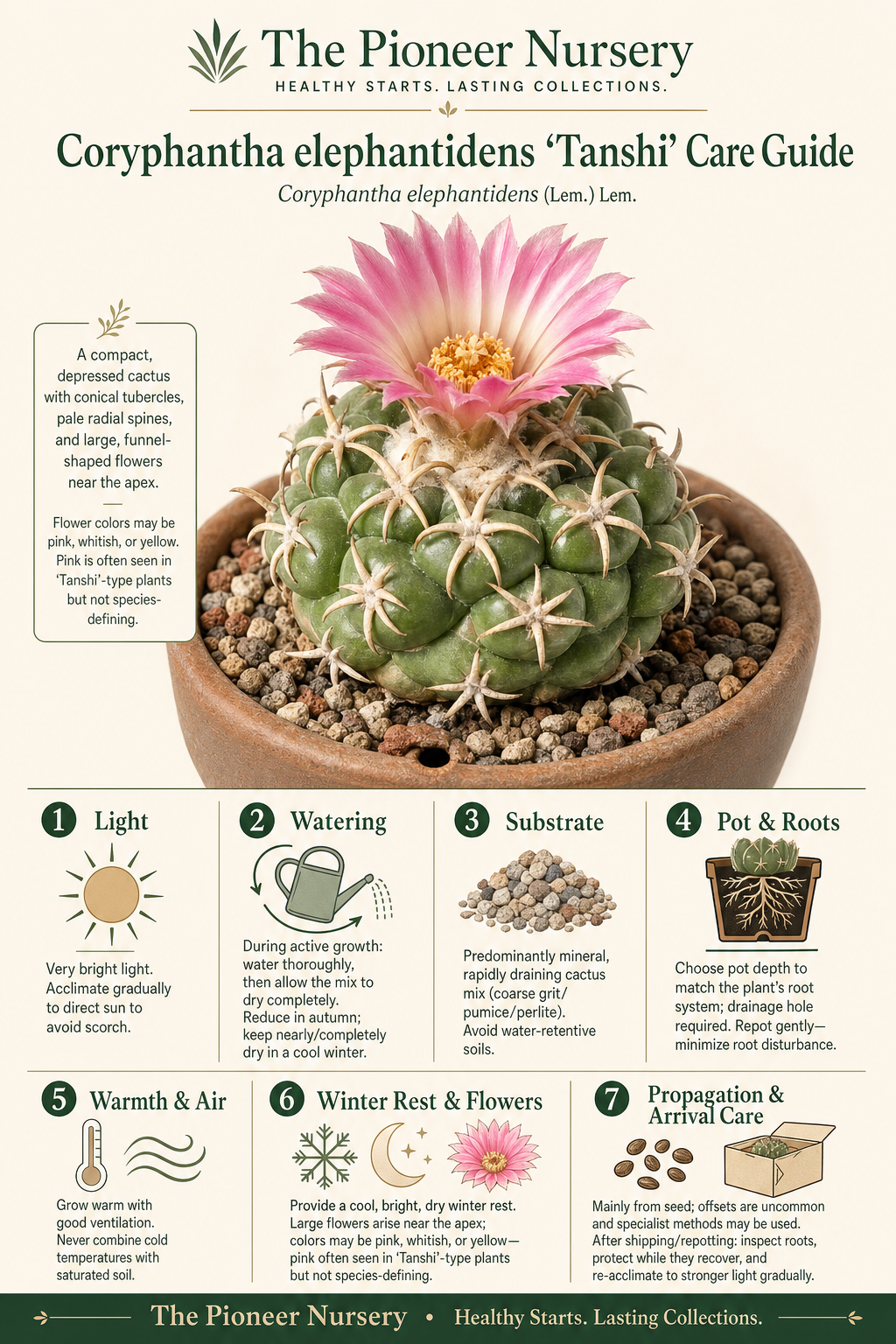
Coryphantha elephantidens, commonly called elephant tusk cactus or elephant tooth cactus, is a Mexican cactus valued for its compact, depressed form and large flowers near the apex. The submitted name “Tanshi” is best treated as horticultural shorthand associated with ‘Tanshi Zougemaru’, rather than as a separate botanical rank. Its main care priorities are strong acclimated light, sharply draining mineral soil, thorough drying between waterings, and protection from cold, wet conditions.
Quick Care Summary
- Provide very bright light with gradual acclimation to direct sun.
- Use a predominantly mineral, rapidly draining cactus substrate.
- Water thoroughly during active growth, then let the substrate dry completely.
- Reduce watering in autumn and keep the plant nearly or completely dry during cool winter dormancy.
- Avoid combining cold temperatures with saturated soil.
- Choose pot depth according to the individual root system.
- Keep newly shipped or repotted plants protected while roots recover.
About the Plant
Coryphantha elephantidens is an accepted species native to Mexico. It is a slow-growing cactus, and typical plants produce offsets only rarely. The “Tanshi” designation is associated with the horticultural name ‘Tanshi Zougemaru’; cultivar-level traits should not be treated as universal species characteristics.
Light
Provide very bright light with several hours of direct sun once the plant is acclimated. Strong light helps maintain a compact, depressed form and supports flowering. Introduce direct sun gradually after shipping, repotting, or moving a plant from a greenhouse or shaded location to reduce sunscald. Intense reflected heat behind glass may require light afternoon protection.
Watering
During active growth, water thoroughly and then allow the substrate to dry completely before watering again. Frequency depends on temperature, light, pot size, substrate, and airflow, so avoid a fixed calendar. Reduce watering in autumn and keep the plant nearly or completely dry during cool winter dormancy. Persistently wet roots, especially in cold conditions, create a substantial rot risk.
Soil and Substrate
Use a porous, rapidly draining cactus mix with a predominantly mineral component such as pumice, lava rock, coarse grit, or similar aggregate. A modest amount of organic material may be included, but the substrate should not remain wet after irrigation. Avoid dense garden soil and compact, poorly aerated mixes.
Potting and Roots
Choose a pot with a drainage hole and enough room for the established root system without using an excessively oversized container. Some Coryphantha plants develop substantial taproots and may benefit from adequate depth, but pot depth should be based on the individual plant’s actual root system. Repot during active growth when possible and disturb roots minimally. After major root damage, allow wounds to dry and provide warm recovery conditions before thorough watering.
Temperature and Ventilation
Grow warm during the active season with excellent ventilation. Protect the plant from prolonged cold, particularly when the substrate is wet. Specialist cultivation references report light-frost tolerance only when plants are kept dry; conservative nursery practice is to provide frost protection and avoid freezing conditions for recently shipped or repotted plants.
Seasonal Growth and Dormancy
Expect growth to slow during a cooler, drier winter rest. Keep the plant bright and dry, using little or no water depending on indoor temperature and visible stress. Resume watering gradually when warmer temperatures and stronger light indicate renewed growth.
Fertilizer
During active growth, occasionally apply a dilute, low-nitrogen cactus fertilizer to already-moist substrate. Do not fertilize during winter dormancy or while the plant is stressed, newly shipped, bare-rooted, or recovering from root disturbance. Excess nitrogen can encourage soft growth and increase rot susceptibility.
Flowering
Mature plants produce large flowers near the apex, commonly reported in pink, whitish, or yellow shades, with flowering observations mainly from late summer into autumn. Strong light, warm-season growth, well-drained roots, and a cool, dry rest generally support flowering. ‘Tanshi Zougemaru’ is associated with pink flowers in horticultural references, but flower color is not a defining species character.
Propagation
Seed is the standard species-level propagation method, but seedlings are slow and susceptible to damping-off. Typical plants produce offsets only rarely. Specialist growers may use grafting to accelerate growth or preserve selected horticultural material. Tissue culture has produced axillary shoots and rooted plantlets in laboratory studies, but this is a specialized commercial or laboratory technique rather than an ordinary home method.
Common Problems
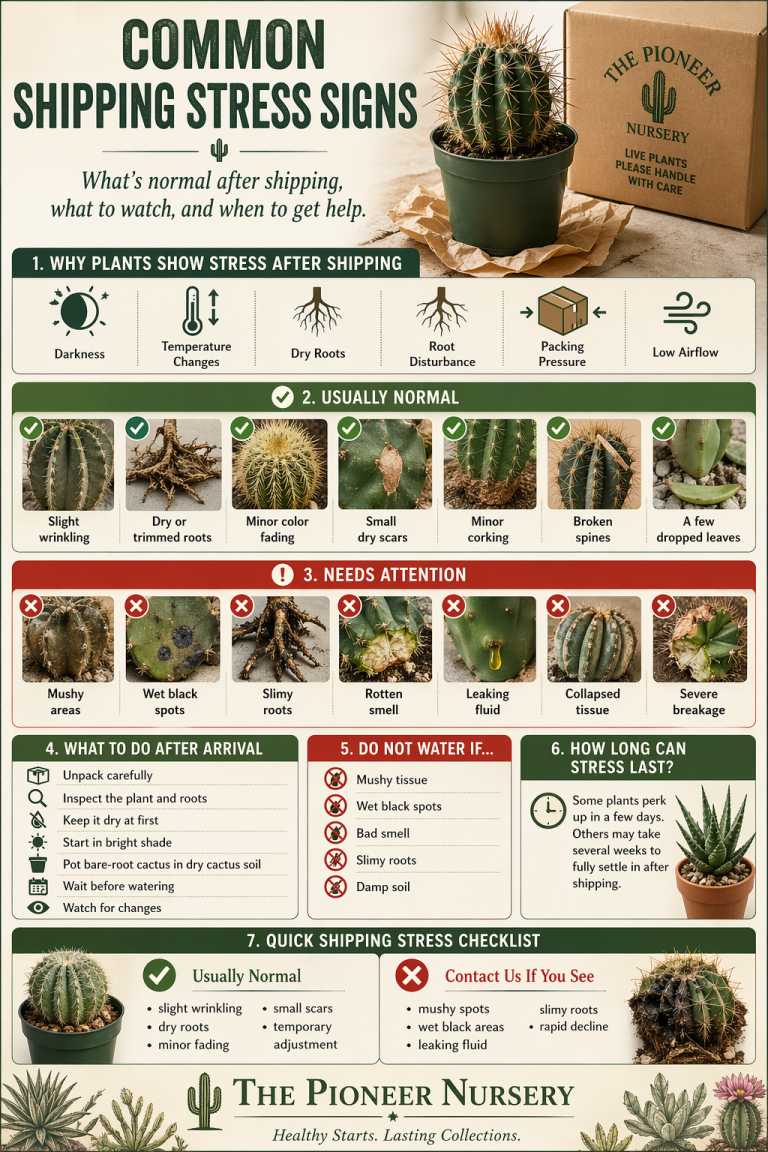
Root rot usually results from frequent watering, poor drainage, inadequate aeration, or cold wet conditions. Sunscald can follow abrupt exposure to intense direct sun. Seedlings may suffer damping-off and other soil-borne problems. Insufficient light can cause weak, elongated growth. Sooty or dark epidermal marking may occur in humid, stagnant conditions, especially where nectar or residues remain on the plant; improve airflow and avoid prolonged surface wetness. Mealybugs, scale, and root-feeding pests may hide among wool, tubercles, or around the root collar. Slow recovery after shipping or repotting is not automatically a sign of failure, particularly after bare-root handling.
Shipping and Arrival Care
Inspect the plant and roots when it arrives. For bare-root plants, remove compromised material and allow damaged surfaces to dry before potting. Do not water immediately after significant root disturbance. Keep a newly received plant in bright filtered light first, then gradually acclimate it to direct sun. Ship and receive plants in dry, well-ventilated conditions, protecting them from freezing temperatures and prolonged heat. Avoid shipping when cold, wet conditions are likely.
Frequently Asked Questions
How often should I water Coryphantha elephantidens ‘Tanshi’?
Water thoroughly during active growth, but wait until the substrate has dried completely. Adjust frequency for temperature, light, pot size, substrate, and airflow rather than following a fixed schedule. Keep it nearly or completely dry during cool winter dormancy.
Does this cactus need direct sun?
It needs very bright light and several hours of direct sun once acclimated. Introduce direct sun gradually after shipping, repotting, or a move from shade to reduce sunscald.
How should I care for it in winter?
Keep it bright, cool, and dry while growth slows. Use little or no water depending on indoor temperature and visible stress, and resume gradually when warmer conditions and stronger light indicate renewed growth.
Does Coryphantha elephantidens need a deep pot?
Some Coryphantha plants develop substantial taproots, but root form can vary. Select pot depth based on the actual root system rather than assuming every plant needs the same container.
How is this cactus propagated?
Seed is the standard species-level method, although seedlings are slow and susceptible to damping-off. Offsets are uncommon. Grafting and tissue culture are used by specialists.
What does ‘Tanshi’ mean in this plant’s name?
“Tanshi” is best treated as commercial or collector shorthand associated with the horticultural name ‘Tanshi Zougemaru’. The underlying species is Coryphantha elephantidens.
Give Coryphantha elephantidens ‘Tanshi’ strong light, fast drainage, and a clear dry period between waterings. Its most important protection is against cold, wet roots, especially during dormancy and after shipping or repotting.