Pachypodium geayi Care Guide
Learn how to grow Pachypodium geayi, a spiny, silver-stemmed caudex succulent from southwestern Madagascar, with guidance on light, watering, drainage, dormancy, repotting, and winter protection.
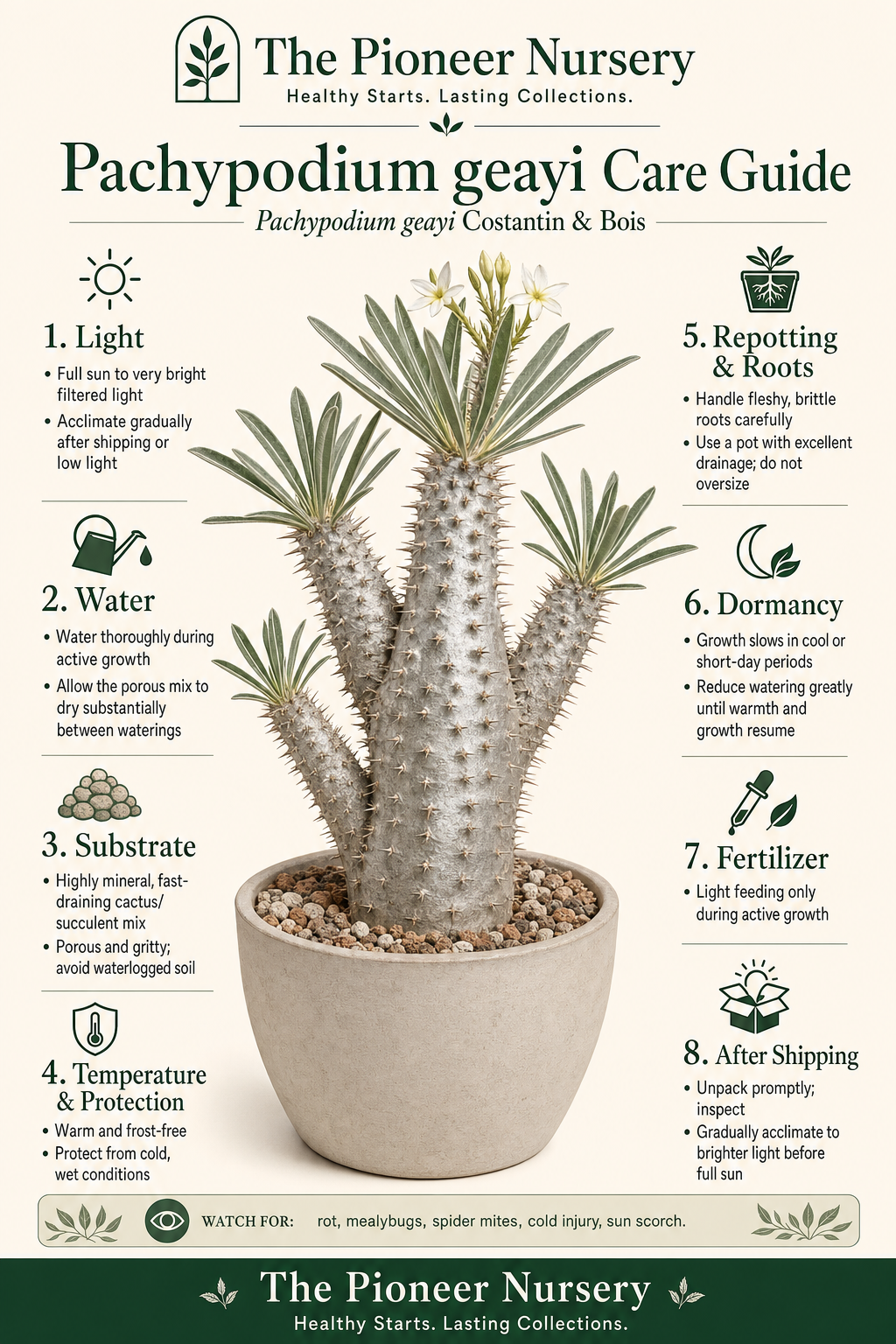
Pachypodium geayi, commonly called Madagascar palm or silver-stem pachypodium, is a spiny caudex-forming succulent shrub or tree from southwestern Madagascar. Despite its common name, it is not a true palm. It develops a metallic-grey, densely spined trunk and narrower, greyer leaves, though young plants can resemble Pachypodium lamerei. The main care priorities are strong light, sharply draining soil, careful watering during active growth, and warm, frost-free conditions—especially after shipping or root disturbance.
Quick Care Summary
- Provide full sun to very bright filtered light, with gradual acclimation after shipping or low-light conditions.
- Water thoroughly during active growth, then let the porous substrate dry substantially.
- Reduce watering greatly during cool or dormant periods.
- Use a highly mineral, fast-draining cactus or succulent substrate.
- Protect the plant from frost and cold, wet soil.
- Handle the fleshy, brittle roots carefully during repotting.
- Feed lightly only during active growth.
- Watch for rot, mealybugs, spider mites, cold injury, and sun scorch.
About Pachypodium geayi
This caudex-forming Pachypodium is associated with a metallic-grey, densely spined trunk and narrower, greyer leaves. White to yellowish-white, star-shaped flowers appear in terminal clusters when the plant receives strong light and grows healthily during the active season.
Light
Provide full sun to very bright filtered light. Acclimate plants gradually when moving them from low light or shipping darkness into intense sun, as abrupt exposure can cause leaf scorch. Partial shade is tolerated but may produce less compact growth and fewer flowers.
Watering
During active growth, water thoroughly, then allow the well-drained substrate to dry substantially before watering again. This tree-like species may use more water in warm, active conditions than smaller Pachypodium species, but its roots should never remain constantly wet. Reduce watering greatly during cool or dormant periods. Occasional minimal watering is appropriate only if the plant becomes significantly wrinkled and the medium is otherwise dry.
Soil and substrate
Use a porous, fast-draining, highly aerated cactus or succulent mix containing substantial mineral aggregate such as pumice, perlite, coarse sand, or grit. Avoid dense soil, excessive organic matter, and substrates that stay wet for long periods.
Potting and roots
Choose a container with excellent drainage. An unglazed clay pot may help the substrate dry more reliably. Pachypodium geayi has fleshy, brittle roots that are easily damaged during repotting. Handle them carefully, remove damaged or rotting tissue cleanly, and allow damaged roots or cuts to dry and heal before resuming irrigation.
Temperature and ventilation
Keep the plant warm and frost-free. Cold conditions are especially risky when the soil is wet, so protect Pachypodium geayi in a greenhouse or another warm, sheltered location during cool winters. Provide good ventilation in greenhouse conditions.
Seasonal growth and dormancy
Growth commonly slows during cool or low-light winter conditions, and watering should then be reduced to a minimum. Plants kept warm and bright may remain partly or fully leafed, but leaf retention does not automatically mean the plant needs regular winter watering. Follow actual growth, temperature, light, and substrate-drying conditions rather than a fixed calendar.
Fertilizer
During active growth, use a balanced liquid fertilizer at reduced strength approximately every two to three weeks, or apply a cautious low-dose controlled-release fertilizer. Avoid heavy feeding when the plant is dormant or stressed.
Flowering
Pachypodium geayi produces terminal clusters of white to yellowish-white, star-shaped flowers. Strong light and healthy active-season growth support flowering, while partial shade may reduce bloom production.
Propagation
Seed is the primary and more dependable propagation method. Sow fresh seed in a sterile, sandy, well-drained medium and keep it warm and lightly moist until germination. Stem cuttings are reported as possible, but seed is the standard approach for maintaining the species.
Shipping and arrival care
Inspect the caudex, spiny stem, foliage, and roots after arrival, taking care to avoid impact damage. Give a shipped plant bright but initially filtered light, then acclimate it gradually to stronger sun. If it arrives bare-root or with substantial root disturbance, keep it warm and dry enough for damaged roots to heal before watering. Cold, wet conditions after shipping create a significant rot risk.
Common Problems
- Root or caudex rot: Usually associated with excessive moisture, poor drainage, or watering in cold conditions.
- Yellowing and leaf drop: Can be associated with overwatering.
- Mealybugs and spider mites: These pests may occur on the plant.
- Cold or frost injury: May cause defoliation and damage to growing points.
- Repotting root damage: The fleshy roots are brittle and require careful handling.
- Sun scorch: Can occur when a plant moves abruptly from low light into intense sun.
Frequently Asked Questions
How much light does Pachypodium geayi need?
Provide full sun to very bright filtered light. Acclimate gradually after shipping or low-light conditions to reduce the risk of leaf scorch.
Should Pachypodium geayi be watered in winter?
Watering should be greatly reduced during cool or dormant conditions. Even if the plant retains leaves, use temperature, light, active growth, and substrate dryness as your guides rather than a fixed schedule.
What soil is best for this Pachypodium?
Use a porous, highly aerated cactus or succulent substrate with substantial pumice, perlite, coarse sand, or grit. Avoid dense, water-retentive soil.
Why is repotting potentially risky?
Pachypodium geayi has fleshy, brittle roots that can be damaged during handling. Let damaged roots or cuts dry and heal before watering again.
Can Pachypodium geayi be grown outdoors?
It requires warm, frost-free conditions. In climates with cool winters, grow it under glass or in another protected warm location, especially when soil may remain wet.
How is Pachypodium geayi propagated?
Propagation is primarily by seed. Fresh seed is sown in a sterile, sandy, well-drained medium and kept warm and lightly moist until germination. Stem cuttings are reported as possible but are less dependable than seed.
Pachypodium geayi rewards a careful balance of strong light, fast drainage, seasonal watering, and warmth. Give its brittle roots gentle treatment, keep it protected from cold and wet conditions, and acclimate it gradually whenever its light environment changes.