Turbinicarpus schmiedickeanus Care Guide
Learn how to grow Turbinicarpus schmiedickeanus, a slow-growing miniature cactus with a large taproot that needs strong acclimated light, mineral soil, careful watering, and a dry winter rest.
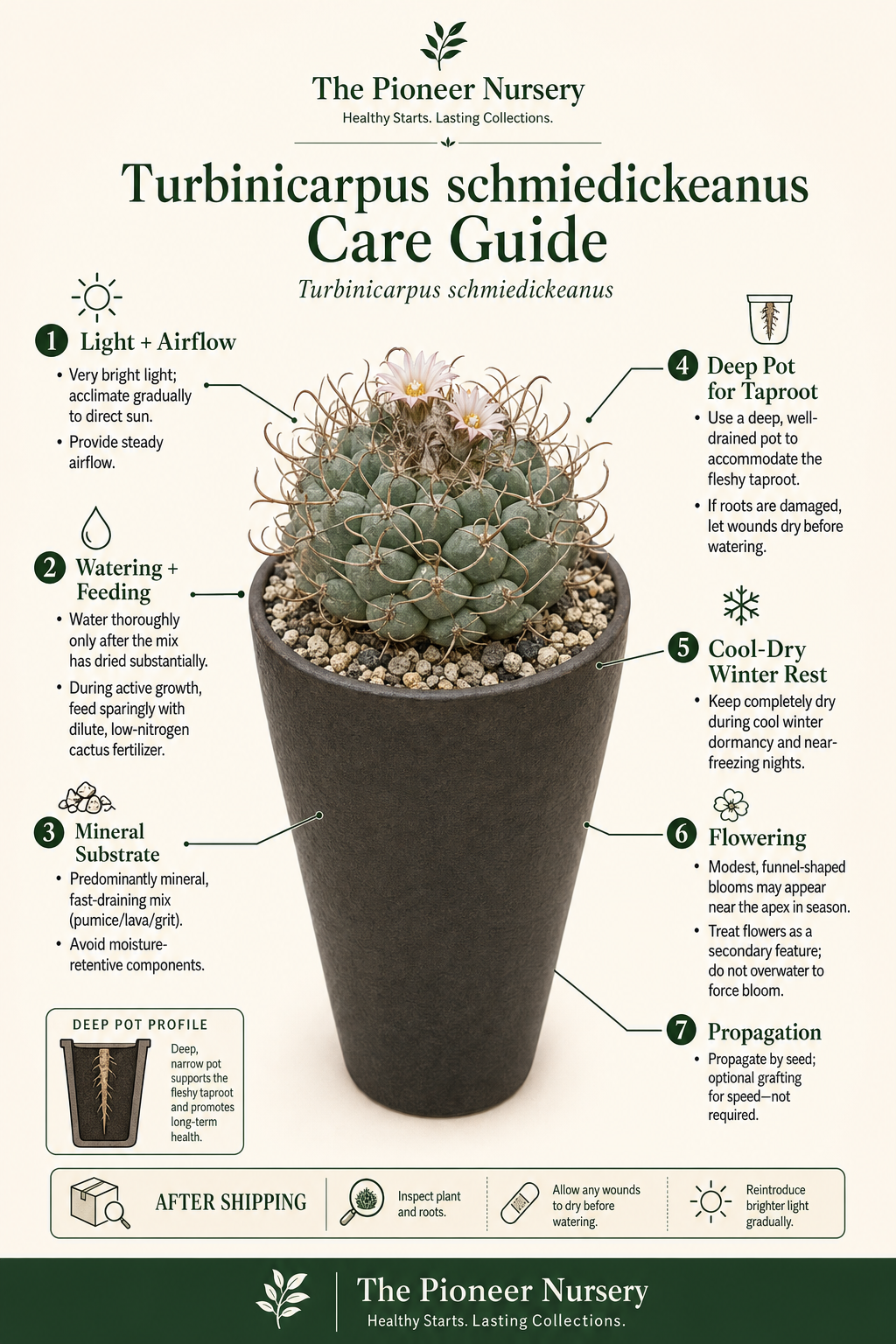
Turbinicarpus schmiedickeanus is a slow-growing miniature cactus with a fleshy taproot and an association with dry, rocky, calcareous habitats. Successful cultivation depends on bright, well-ventilated conditions, a predominantly mineral substrate, a pot deep enough for the taproot, and restrained watering. The submitted botanical name is an accepted species name; older generic placements may appear in historical references, but they describe the same botanical identity.
Quick Care Summary
- Provide very bright light with good airflow, acclimating gradually to direct sun.
- Use a deep, well-drained pot for the fleshy taproot.
- Grow in a predominantly mineral, fast-draining substrate.
- Water thoroughly only after the mix has dried substantially.
- Keep completely dry during cool winter dormancy and near-freezing nights.
- Feed sparingly with dilute, low-nitrogen cactus fertilizer during active growth.
- Treat damaged roots carefully and delay watering until wounds have dried.
About Turbinicarpus schmiedickeanus
This is a compact, root-sensitive cactus rather than a plant suited to rich or moisture-retentive soil. Its enlarged taproot stores moisture but is vulnerable to cracking and rot when the plant is overwatered or kept cold and wet. Its slow growth makes careful long-term cultivation more important than frequent repotting or heavy feeding.
Light and Airflow
Provide very bright light with good air movement. Full sun to light shade can be appropriate after gradual acclimation. Plants arriving from shipping or grown under greenhouse shade should not be moved abruptly into intense outdoor sun, as this can cause sunburn. Strong light helps maintain the compact form and normal spine development.
Watering
Water thoroughly but infrequently, and only after the substrate has dried substantially. During active growth, allow the plant to dry between waterings rather than applying repeated small amounts. Keep it completely dry during cool winter dormancy and whenever nighttime temperatures remain near or below 10 °C / 50 °F. Excess moisture is especially hazardous when conditions are cold, poorly ventilated, or the roots have recently been disturbed.
Soil and Substrate
Use an open, fast-draining, predominantly mineral mix with excellent aeration. Suitable components include pumice, lava rock, coarse sand, and other nondecomposing mineral particles. Because the species is associated with calcareous rocky habitat, a modest limestone component may be suitable, but limestone should not be used as a reason to keep the mix alkaline and wet.
Potting and Roots
Choose a pot with a drainage hole and enough depth for the fleshy taproot. Avoid water-retentive cachepot conditions. Repot only when necessary, since root disturbance can increase the risk of rot. Handle the taproot carefully; if roots are damaged or rotting, remove affected tissue and allow significant wounds to dry and callus. After major root disturbance, resume watering cautiously only after wounds have dried and the plant has re-established in warm, well-ventilated conditions.
Temperature and Winter Rest
Keep the plant warm and well ventilated during active growth. A dry plant may tolerate a brief light frost according to specialist cultivation references, but routine cultivation should avoid freezing conditions. Cold combined with wet substrate is a major rot risk. During winter, provide a cool-to-mild, bright, completely dry rest. Resume watering gradually when temperatures are reliably suitable for growth and seasonal activity begins; do not follow a fixed calendar schedule.
Fertilizer
Feed sparingly during active growth with a dilute, low-nitrogen cactus fertilizer. Frequent feeding or excess nitrogen can cause soft, elongated growth and increase disease susceptibility. Do not fertilize during dormancy.
Flowering
Flowers appear near the apex and are described as small and funnel-shaped. Depending on the form or subspecies, colors may range from white to pinkish or yellowish. Strong light, mature growth, restrained feeding, and a dry winter rest support flowering.
Propagation
Propagation is primarily by seed. Turbinicarpus schmiedickeanus is slow growing and may only rarely produce offsets. Grafting is also used to accelerate growth or assist difficult specimens, but it is not required for successful cultivation. Seedlings should be kept evenly but carefully moist during germination, then gradually acclimated to drier conditions as they establish.
Shipping and Arrival Care
Receive and ship plants dry, protected from crushing, and with adequate ventilation. After bare-root or otherwise stressful shipping, inspect the root system and allow any wounds to dry before watering. Acclimate gradually to strong light. Do not water immediately if roots are damaged, the plant is cold, or the substrate is not drying quickly. Because Turbinicarpus is listed in CITES Appendix I, international shipments require verification of applicable permits, source documentation, and artificial-propagation requirements before dispatch.
Common Problems
- Root or basal rot: Usually associated with wet soil, poor drainage, cold conditions, or inadequate airflow.
- Cracking or splitting: Can follow excessive watering or rapid rehydration after prolonged dryness.
- Etiolation: Insufficient light or excessive watering can cause unnatural elongation.
- Mealybugs: Monitor for root mealybugs and occasional aerial mealybugs, especially on stressed or poorly inspected plants.
- Sunburn: Abrupt movement from greenhouse shade to intense outdoor light can scorch the plant.
- Post-repotting loss: Watering damaged roots before they dry and heal increases risk.
Frequently Asked Questions
How often should I water Turbinicarpus schmiedickeanus?
Do not use a fixed calendar. Water thoroughly only after the substrate has dried substantially, and keep the plant completely dry during cool winter dormancy or when nighttime temperatures remain near or below 10 °C / 50 °F.
Does this cactus need full sun?
Very bright light is important, and full sun to light shade may be suitable after gradual acclimation. Increase exposure gradually, especially after shipping or greenhouse production.
What kind of soil does it need?
Use a predominantly mineral, open mix based on materials such as pumice, lava rock, and coarse sand. The substrate should drain and dry quickly while providing excellent aeration.
Why does the pot need to be deep?
The species develops an enlarged fleshy taproot, so it needs enough pot depth for the root. Handle that taproot carefully during repotting because damage can increase rot risk.
Can Turbinicarpus schmiedickeanus be propagated from seed?
Yes. Propagation is primarily by seed, although the species is slow growing. Grafting is also used to accelerate growth or assist difficult specimens.
Can I ship this cactus internationally?
Turbinicarpus is listed in CITES Appendix I. Before international dispatch, verify applicable permits, source documentation, and artificial-propagation requirements.
Turbinicarpus schmiedickeanus rewards patient growers who keep its roots airy, its light strong but acclimated, and its watering restrained. A mineral substrate, careful root handling, and a genuinely dry cool-season rest are the foundations of long-term success.