Gymnocalycium ochoterenae Cristata Care Guide
Learn how to care for the crested form of Gymnocalycium ochoterenae, including light, watering, substrate, dormancy, flowering, propagation, and arrival recovery.
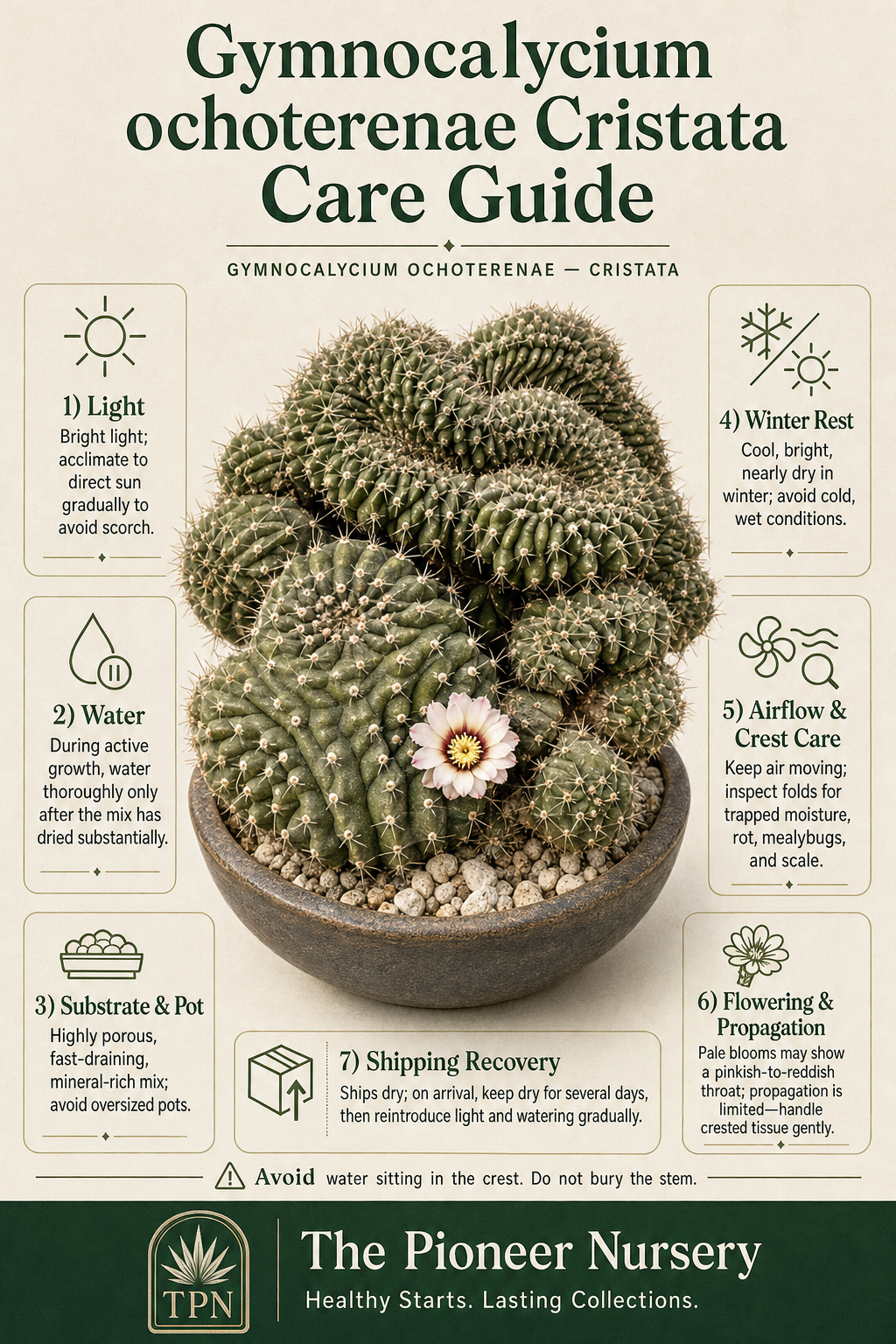
Gymnocalycium ochoterenae Cristata is the crested form of the chin cactus Gymnocalycium ochoterenae. Instead of forming one central growing point, its stem develops into a folded or fan-shaped crest. It generally enjoys the care of the underlying species—bright light, porous soil, careful watering, and a cool, dry winter rest—with extra attention to airflow, drying time, and pest inspection in the plant’s folds. Gymnocalycium ochoterenae is an accepted species; “Cristata” describes its horticultural growth form rather than a separate botanical species.
Quick Care Summary
- Bright light with gradual acclimation to direct sun.
- Water thoroughly during active growth only after the substrate has dried substantially.
- Keep the plant nearly dry during a cool, low-light winter rest.
- Use a highly porous, fast-draining mix with substantial mineral content.
- Avoid excessive pot volume and maintain airflow around the crest.
- Inspect folds regularly for trapped moisture, rot, mealybugs, and scale.
- Avoid cold, wet conditions, which can cause rot.
Light
Provide bright light with several hours of direct sun once the plant is acclimated. Morning sun or filtered high light is usually appropriate. Intense, unfiltered afternoon sun can scorch pale or thin crested tissue. After shipping, repotting, or moving the plant outdoors, increase light gradually over approximately one to several weeks, watching the plant’s response.
Watering
During active growth, water thoroughly only after the substrate has dried substantially, and let excess water drain completely. This Gymnocalycium can appreciate more regular watering in warm, bright growth than extremely drought-adapted cacti, but its roots should never remain constantly wet. Reduce watering sharply in cool or low-light conditions and keep the plant nearly dry during a cool winter rest. The crest’s folds can hold moisture longer than a normal spherical stem, so allow them to dry well.
Soil and Substrate
Use a very porous, fast-draining cactus mix with substantial mineral material such as pumice, perlite, coarse grit, or lava, combined with a modest amount of organic component. The mix should support active growth without becoming compacted or waterlogged.
Potting and Roots
Choose a modestly sized container with an unobstructed drainage hole. Avoid excessive pot volume so the substrate dries predictably. Do not bury the stem, and maintain good air movement around the irregular crest. When repotting, remove loose old soil, inspect the roots for rot, and allow damaged roots to dry before watering.
Temperature and Dormancy
Protect the plant from frost and prolonged temperatures near freezing. Warm conditions support active growth, while cool conditions should be paired with dry soil because cold combined with wetness creates a significant rot risk. Treat it as primarily a warm-season grower: provide a cool, bright, nearly dry winter rest, then resume watering gradually when warmth and active growth return.
Fertilizer
Feed only during active growth with a dilute, balanced fertilizer or cactus fertilizer at intervals suited to the growing environment. Avoid heavy nitrogen feeding, especially in low light. Do not fertilize a dry, stressed, recently repotted, or dormant plant.
Flowering
Gymnocalycium species are valued for relatively large, showy flowers compared with their body size. Gymnocalycium ochoterenae is reported to produce pale flowers with a pinkish to reddish throat and may flower readily when mature and given sufficient light, warmth, porous soil, and a pronounced dry winter rest. Cristate growth may flower less predictably than normal growth, while reverted normal shoots may be more likely to flower.
Propagation
The species can be grown from seed, but seedlings will not reliably retain the cristate form. To preserve the crest, use viable crested offsets or cut sections, allowing wounds to callus fully before placing them on a dry, porous rooting medium. Grafting is also a legitimate option for maintaining or establishing selected crested material, but it is not inherently required for every plant.
Shipping and Arrival Care
Receive and ship this plant on the dry side. After bare-root arrival or major root disturbance, avoid immediate heavy watering. Inspect the folds and irregular surfaces carefully because they can conceal soft rot or retain shipping moisture. Allow damaged roots or wounds to dry, pot into a dry porous mix, reintroduce water cautiously, and acclimate the plant gradually to stronger light.
Common Problems
- Root or basal rot from prolonged wetness, poor drainage, or watering while cold.
- Sunburn after sudden exposure to intense direct light.
- Mealybugs or scale concealed in the folds and crowded areas of the crest.
- Soft, discolored tissue associated with fungal or bacterial rot.
- Weak, elongated growth caused by insufficient light.
- Reversion to normal, non-crested growth; reverted shoots may be removed if maintaining the crest is important.
Frequently Asked Questions
How often should I water Gymnocalycium ochoterenae Cristata?
Do not use a fixed calendar. During warm, bright growth, water thoroughly after the substrate has dried substantially. Reduce watering sharply in cool or low-light conditions and keep the plant nearly dry during winter rest.
Can the crested form take direct sun?
Yes, after gradual acclimation. Several hours of direct sun can be suitable, but intense unfiltered afternoon light may scorch crested tissue, especially after shipping or a move from shade.
Why does this cactus need extra attention to airflow?
Its folded, irregular crest can trap moisture and conceal pests or soft rot. Good airflow and careful inspection help the surface dry properly.
Will seedlings keep the cristate form?
Not reliably. Seed-grown plants may not retain the crest. Vegetative propagation of viable crested material is more appropriate when preserving the form is the goal.
Can Gymnocalycium ochoterenae Cristata flower?
Yes. Mature plants may flower with sufficient light, warmth, porous soil, and a pronounced dry winter rest, though cristate growth may flower less predictably than normal growth.
Give this crested Gymnocalycium bright but carefully acclimated light, porous soil, thorough yet conditional watering, and a cool, dry winter rest. The most important extra habits are keeping moisture out of the folds, maintaining airflow, and inspecting the crest regularly.