Pachypodium lamerei Care Guide
Learn how to grow Pachypodium lamerei, a spiny stem succulent from Madagascar, with guidance on light, watering, soil, dormancy, flowering, propagation, and safe handling.
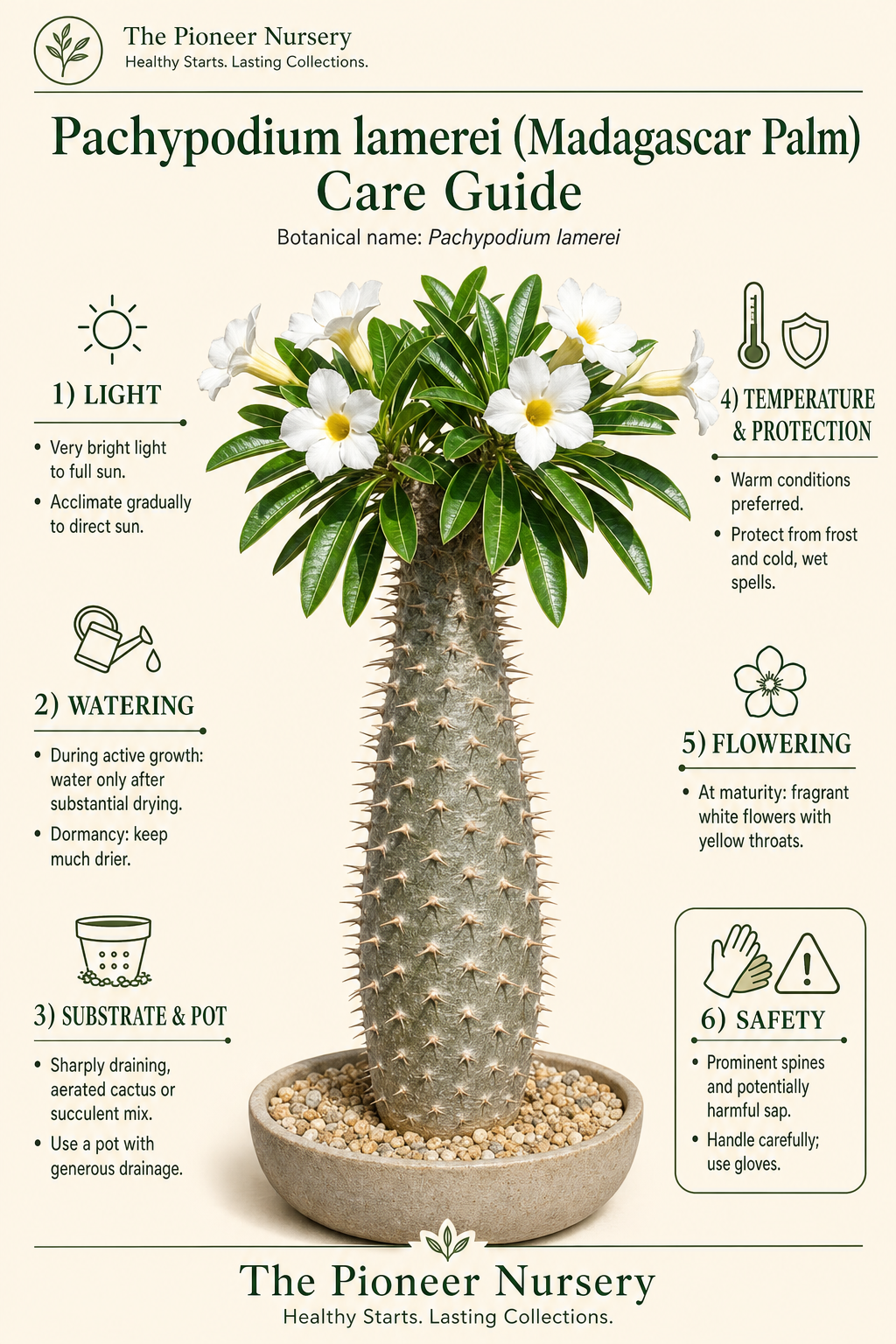
Pachypodium lamerei, commonly called Madagascar palm, is a spiny stem succulent from Madagascar—not a true palm. Its swollen trunk stores water, so successful care depends on very bright light, sharply draining soil, warm conditions, and allowing the substrate to dry substantially between waterings. The plant commonly slows or loses its leaves during a cool or dry resting period and must be protected from frost and cold, wet conditions.
Quick Care Summary
- Provide very bright light to full sun, with gradual acclimation.
- Use a sharply draining, aerated cactus or succulent substrate.
- Water during active growth only after substantial drying; keep it much drier during dormancy.
- Protect it from frost and cold, wet conditions.
- Handle with gloves because of the spines and potentially harmful sap.
About Pachypodium lamerei
This species is a member of the Apocynaceae family and develops a prominent, spiny trunk. Although outdoor plants in suitable warm climates may eventually become large, container and indoor specimens generally remain smaller and grow more slowly. The sap is reported as toxic or potentially harmful, so handle the plant carefully.
Light
Provide very bright light to full sun. Acclimate gradually when moving a plant from indoor, shaded, or recently shipped conditions into stronger sunlight. Under glass, full light is recommended. Abrupt exposure to intense sun can cause scorch.
Watering
During active growth, generally from late spring through early autumn, water thoroughly after the substrate has dried substantially. Reduce watering as growth slows, keeping the plant dry or nearly dry during the cool dormant period. Constantly wet roots are especially risky in cool conditions.
Soil and substrate
Use a sharply draining, aerated cactus or succulent substrate. A mineral-rich mix with good structural porosity is preferable to dense, moisture-retentive soil. The container must have drainage holes.
Potting and root care
Repot only when necessary, and handle the spiny stem and roots carefully. After significant root disturbance or bare-root shipping, allow damaged roots to dry and recover before resuming conservative watering. Avoid watering before the plant and roots are re-established.
Temperature and dormancy
Pachypodium lamerei prefers warm conditions and is frost-intolerant. Protect it from freezing temperatures. Cold combined with wet substrate can lead to root or stem rot. The plant is seasonally deciduous and may reduce or lose its leaves during a dry or cool resting period. Keep it much drier during dormancy and resume more regular watering when warmth and active growth return.
Fertilizer
During active growth, use a dilute, low-nitrogen liquid fertilizer at approximately four- to five-week intervals. Do not fertilize a dormant or stressed plant.
Flowering
Mature plants can produce terminal clusters of fragrant white flowers with yellow throats. Young or indoor-grown plants are less likely to flower. Strong light, warmth, and sufficient maturity support flowering.
Propagation
Propagation is primarily by seed. Germination temperatures around 19–24°C (66–75°F) have been reported. Stem-tip cuttings may also be taken in late spring, with success depending on proper drying and sterile, well-drained conditions.
Safe handling
Wear gloves and eye protection when handling or pruning. The prominent spines can cause injuries, and the sap is reported as toxic or potentially harmful. Keep the plant away from children and pets.
Shipping and arrival care
Protect the plant from freezing temperatures and physical damage during shipping. After arrival, inspect for damage and acclimate it gradually to stronger light. For bare-root plants or plants with damaged roots, delay watering until the roots have dried and the plant is re-established.
Common Problems
- Root or stem rot: Usually associated with wet, poorly aerated substrate, especially during dormancy or cool conditions.
- Leaf drop: May result from seasonal dormancy, inadequate light, cold exposure, or abrupt environmental change.
- Aphids: These may attack plants during flowering.
- Sun scorch: Can occur when a shaded or indoor plant is moved abruptly into intense sun.
- Handling injuries: The spines and potentially harmful sap require careful handling.
Frequently Asked Questions
How often should I water Pachypodium lamerei?
During active growth, water thoroughly after the substrate has dried substantially. Keep it dry or nearly dry during cool dormancy.
Can Pachypodium lamerei grow in full sun?
Yes. Very bright light to full sun is appropriate, but acclimate gradually if the plant has been indoors, shaded, or recently shipped.
Why is my Madagascar palm losing leaves?
Leaf loss can be part of its seasonal dormant period. It may also follow inadequate light, cold exposure, or abrupt environmental change.
Can Pachypodium lamerei flower indoors?
Flowering is less likely on young or indoor-grown specimens. Mature plants need strong light, warmth, and sufficient maturity to produce fragrant white flowers.
What should I do when a plant arrives bare-root?
Let damaged roots dry and recover before watering, then re-establish the plant conservatively. Keep it protected from freezing temperatures.
Is Pachypodium lamerei safe to handle?
Use gloves and eye protection. The plant has prominent spines, and its sap is reported as toxic or potentially harmful. Keep it away from children and pets.
With strong light, warm conditions, fast drainage, and a distinctly drier dormant period, Pachypodium lamerei can be a rewarding collector plant. Pay particular attention to cold, wet roots and acclimate changes in light gradually.