Strombocactus disciformis Care Guide
Learn how to grow Strombocactus disciformis, a slow-growing Mexican cactus with a flattened form, stout taproot, bright-light needs, and careful watering requirements.
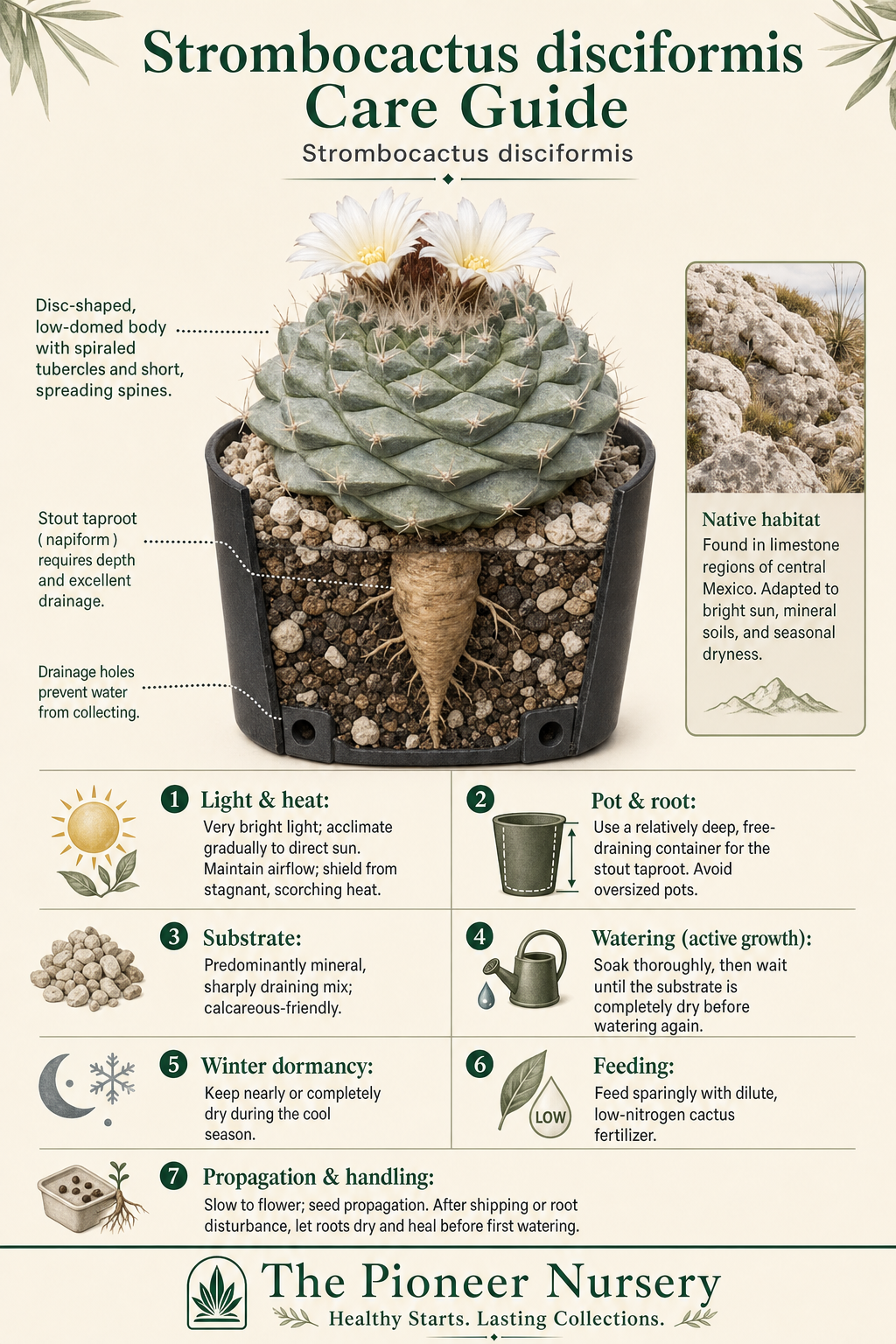
Strombocactus disciformis, also called disc cactus or artichoke cactus, is an extremely slow-growing Mexican cactus associated with dry limestone and calcareous habitats. Its flattened form and stout, turnip-like taproot make drainage, careful watering, and appropriate pot depth especially important. Give it very bright light, let the substrate dry fully between active-season waterings, and keep it nearly or completely dry during cool winter dormancy.
Quick Care Summary
- Provide very bright light with gradual acclimation to direct sun.
- Use a predominantly mineral, sharply draining substrate.
- Choose a relatively deep pot for the stout taproot, but avoid oversized containers.
- Water thoroughly only after the substrate has dried fully during active growth.
- Keep nearly or completely dry during cool winter dormancy.
- Maintain warmth, ventilation, and protection from stagnant summer heat.
- Feed sparingly with dilute, low-nitrogen cactus fertilizer.
- After shipping or root disturbance, allow damaged roots to dry and heal before watering.
About Strombocactus disciformis
This specialized cactus has a flattened form and a stout taproot that stores water. Its slow growth means changes in size may be subtle, and excessive water or fertilizer can produce soft, swollen, or elongated growth. The name Ariocarpus disciformis and several older names may appear in references, but they refer to this species; Strombocactus disciformis is the primary botanical identity used here.
Light
Provide very bright light with several hours of direct sun after gradual acclimation. Strong light helps maintain the compact shape. After indoor or shaded cultivation, increase direct exposure progressively to reduce sun scorch. In very hot climates or behind glass, light afternoon shade and strong airflow can help manage heat and scorching.
Watering
During active growth, water thoroughly only after the substrate has dried fully, then allow it to dry again. Water sparingly because the plant grows slowly and has a water-storing taproot. During cool winter dormancy, keep it nearly or completely dry, especially when light and nighttime temperatures are low. Cold, wet conditions create a serious risk of root and stem rot. Resume watering gradually when warmer temperatures and stronger light support renewed growth.
Soil and substrate
Use a predominantly mineral, rapidly draining substrate with excellent aeration. A calcareous or mildly alkaline mineral component is reasonable because the species is associated with limestone and calcareous shale habitats. Avoid heavy, water-retentive potting soil and any mix that remains wet for extended periods.
Potting and roots
The stout, turnip-like taproot calls for a relatively deep container with a drainage hole. Avoid oversized pots, which can hold moisture too long, and avoid shallow decorative containers that restrict the root. Repot only when necessary, preferably during warm active growth, and handle the root system carefully. After substantial root disturbance, allow damaged roots to dry and heal before cautious watering resumes.
Temperature and seasonal growth
Keep the plant warm and well ventilated during active growth. Growth slows or stops during the cooler, darker season, when it should receive a bright, dry winter rest with little to no irrigation. A winter location preferably above approximately 5–10 °C is recommended. Brief cold may be tolerated when completely dry, but cold and damp conditions substantially increase rot risk.
Fertilizer
Feed sparingly during active growth with a dilute, low-nitrogen cactus fertilizer. Frequent feeding or excess fertilizer is unnecessary for this very slow-growing species and may encourage soft, swollen, or elongated growth.
Flowering
Mature plants produce small pinkish to cream flowers. Seed-grown plants are slow to reach flowering size; specialist cultivation references commonly report approximately 8–10 years under suitable conditions. Patience, strong light, restrained watering, and steady cultivation are important.
Propagation
Propagation is primarily by seed. Seedlings are exceptionally small and slow growing, and their early years require careful moisture and environmental control. Grafting may accelerate growth or help preserve difficult seedlings, although grafted plants may develop a less characteristic form. Occasional offsets or basal shoots may be rooted, but this is not the normal propagation method.
Shipping and arrival care
Inspect the plant after arrival, paying particular attention to the taproot and root neck. After bare-root shipping or major root disturbance, do not water immediately; allow any damaged roots to dry and heal before cautious rewatering. Reintroduce strong light gradually rather than placing a recently shipped plant straight into intense direct sun.
Common Problems
- Root or basal rot: Usually associated with wet, poorly aerated substrate, especially during cool weather.
- Loss of compact form: Insufficient light or excessive watering can cause elongation or less characteristic growth.
- Sun scorch: Abrupt exposure to intense direct sun can damage plants coming from indoor or shaded conditions.
- Heat and humidity stress: Stagnant summer conditions call for ventilation and appropriate afternoon shade.
- Seedling losses: Overwatering, excessive organic matter, and premature handling are especially risky for slow-growing seedlings.
Frequently Asked Questions
How often should I water Strombocactus disciformis?
Do not use a fixed calendar. During active growth, water thoroughly only after the substrate has dried fully. In cool winter dormancy, keep the plant nearly or completely dry.
Does Strombocactus disciformis need direct sun?
It needs very bright light and several hours of direct sun after gradual acclimation. In very hot climates or behind glass, light afternoon shade and strong airflow can reduce scorch and heat stress.
What kind of pot does this cactus need?
Use a relatively deep container with drainage to accommodate its stout taproot. Avoid oversized pots that stay wet too long and shallow containers that restrict the root.
How long does it take to flower from seed?
It is very slow to reach flowering size. Specialist cultivation references commonly report approximately 8–10 years for ungrafted seedlings under suitable conditions.
Can Strombocactus disciformis be propagated by grafting?
Yes. Grafting is used to accelerate growth or preserve difficult seedlings, although grafted plants may develop a less characteristic form. Seed remains the primary propagation method.
What should I do after the plant arrives bare-root?
Inspect the taproot and root neck, do not water immediately, and allow damaged roots to dry and heal before cautious watering. Reintroduce strong light gradually.
Strombocactus disciformis rewards steady, restrained care rather than frequent intervention. Bright light, mineral drainage, a deep but not oversized pot, and a genuinely dry cool-season rest help protect its distinctive form and root system.